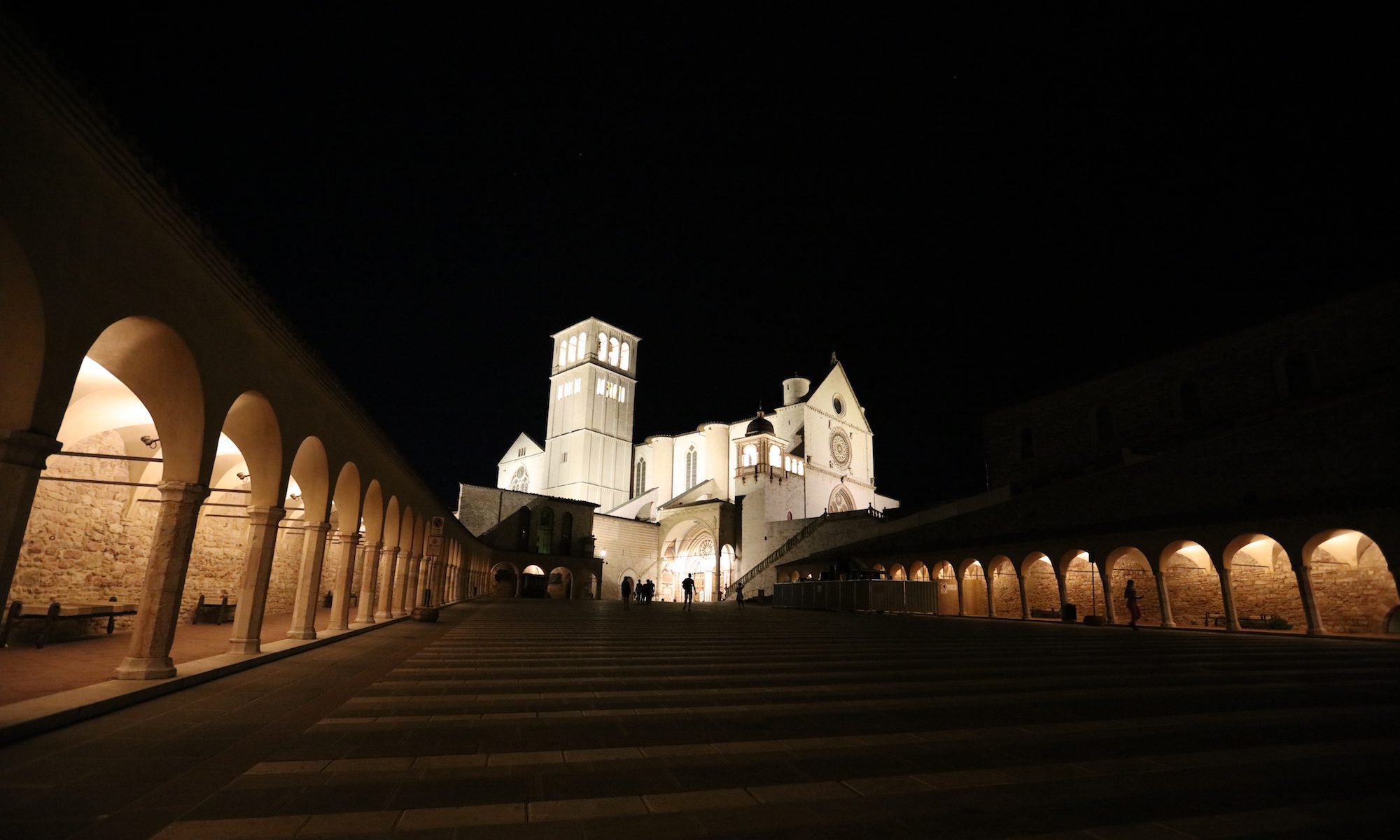
IX Plenary Council of the Order (PCO IX)
“The missionary dimension of our charismatic identity in the Church and in today’s world”
Table of Contents
- INSTRUMENTUM LABORIS
- Presentation
- The Mission of the Order
- 1. A hermeneutical key
- 2. A desire for mission: the vitality of the charism
- 3. The real place given to mission: willingness and limitations
- 4. The factors limiting missionary outreach
- 5. Perspectives: The missionary charism and its prophetic transmission
- 6. The revival of missionary zeal: from theory to practice
- Fraternal Collaboration in the Order
- 1. Introduction
- 2. The beating heart of our identity
- 3. Beyond borders: the prophecy of brotherly collaboration
- 4. From formation to mission
- 5. From an emergency mindset to a culture of systematicity. Guidelines for the Order
- 6. An analysis of the hopes, circumstances, and fears of the friars facing the universal call
- 7. Collaboration as the fruit of life
- 8. Conclusion
- The Fraternities of St. Lawrence of Brindisi within the Order
- 1. Introduction
- 2. The concept of the FSL and how it was understood by the brothers of the Order
- 3. Achievements already in sight and hopes for the future of the Order
- 4. Risks, concerns and challenges that must be considered
- 5. Perspectives from the FSL on revitalizing our charism within the Order
- 6. The FSL at the upcoming PCO: a practical workshop on living out mission and collaboration within the Order
Presentation
We are living in a time of grace. After celebrating various Franciscan anniversaries, we are now on our way toward the 500th anniversary of the Capuchin Reform. A rich program has been developed to help us experience this historic moment as a propitious opportunity for spiritual renewal. This renewal is motivated by the fact that we are a Reform that is always reforming itself. On this journey, we wish to rekindle our charismatic identity and continue to be, for the world and at the heart of the Church, a prophetic voice rooted in the values of our spirituality and our charism.
As we approach the 500th anniversary of our Order, among the many preparatory events is the convening of PCO IX, whose central theme is mission. The decision to revisit this theme, given that PCO III in 1978 addressed the same subject, stems from the awareness that the world, culture, and the Church’s process of evangelization have changed significantly. The Order, too, is no longer the same; one needs only to consider the number of friars and their geographical distribution.
In preparation for PCO IX, a preparatory commission was established. The intention was to form a relatively small commission, but one that would, in its preliminary work, consider all the areas where we are present, first through the General Councilors and then by consulting the friars of all the conferences. The commission’s first task was to find a way to hear from all the friars. Three short texts were drafted on mission, collaboration, and the Fraternities of St. Lawrence, each accompanied by a questionnaire to be completed and sent to the commission.
There were three ways to respond to the questions: as a circumscription, as a fraternity, and individually. As a result, the commission received a large volume of responses, reflecting strong participation from across the Order. Statistically, the numbers are as follows: 59 circumscriptions, 118 fraternities, and 31 friars responded to the questionnaires individually.
The commission, in close collaboration with the offices of mission, formation, communications, and statistics, conducted an initial analysis of all the material received and prepared a summary that brought together all the information and ideas submitted. Based on this summary, the Commission then drafted an Instrumentum laboris.
The Instrumentum laboris is a document that brings together the views of the friars on the topics to be addressed at PCO IX. It is a concise text that seeks to remain as faithful as possible to the material the friars received from the commission, while also offering insights that can aid in ongoing reflection in preparation for PCO IX. These are not proposals—which will be the task of the PCO itself—but rather a synthesis of what the friars think about the central theme of the meeting, raising certain questions, challenges, and hopes, presented even with conflicting or uncomfortable opinions, but which will help us reflect more deeply and prepare ourselves more adequately for this great event of our Order.
Through the Instrumentum laboris, we are sharing with the entire Order the sentiments of the friars as expressed in their responses to the questionnaires we sent out. However, we do not want this material to remain merely a document for information. It is a working tool intended to continue involving all the friars in preparation for PCO IX. For this reason, we ask the circumscriptions to organize at least one local chapter in every fraternity to reflect on this material. And if there are any new contributions deemed important for the PCO, the circumscription may forward them to the conference delegates who will participate in the event.
Delegates attending PCO IX in person are asked to conduct a thorough study of the Instrumentum laboris. Not only this document, but also all the material the Order already possesses on the themes of mission, collaboration, and the Fraternities of St. Lawrence. This will enable them to arrive at the PCO well-prepared, so as to offer an intelligent, mature, and clear reflection that will take shape in the proposals developed during the meeting in Rome this coming October.
The Mission of the Order
1. A hermeneutical key
“Go, therefore, and make disciples of all nations, baptizing them in the name of the Father, and of the Son, and of the Holy Spirit, teaching them to observe all that I have commanded you. And behold, I am with you always, even to the end of the age.” (Mt 28, 19-20)
“In our apostolic brotherhood, we are all called to bring the joyful message of salvation to those who do not believe in Christ, in whatever continent or region they may find themselves. For this reason, all of us consider ourselves to be missionaries.” (Const. 176:1)
“The specific Capuchin contribution to missionary activity is found in faithfulness, as individuals and in community, to our charism as Friars and Minors. This consists in incarnating the Gospel in our lives by joyfully and with simplicity revealing the Father’s love for people. To be credible one must be genuine.” (PCO III, 12)
2. A desire for mission: the vitality of the charism
Premise: The missionary zeal is alive and well in the Order, and for most friars, it is the very essence of the Capuchin vocation. Missionary work is not only a fundamental part of the Order’s pastoral ministry but also of what it means to be a Capuchin friar. To be a Capuchin is to be a missionary. Let us summarize the responses regarding this zeal.
“Our Order welcomes as its own the commitment to evangelise, which belongs to the whole Church. It values missionary work and undertakes it as one of its principal apostolic tasks, as a contribution to the renewal and building up of the Body of Christ.” (Const.175:5)
From the responses received, it is clear that the vast majority of the friars have a desire for mission and recognize that mission is an essential part of the Order’s charism. For many brothers, mission is the very reason for their vocation. In fact, approximately 65% of the brothers express a deep and profound desire for mission: they see their vocation as a missionary response to God’s call. For these friars, the reason for being missionaries lies in the necessity and the Gospel mandate to bring Christ closer to humanity and humanity closer to God. The motivation is therefore theological and biblical, namely, to fulfill the Lord’s command: “Go into all the world and preach the Gospel to every creature.” (cf. Mk 16:15)
About 25% of the friars feel a missionary calling and view their vocation as a missionary calling. At the same time, while these friars are aware that mission is a fundamental part of the Capuchin identity, they also recognize the factors that end up dampening this desire, such as concerns about maintaining facilities, a formation program focused almost entirely on sacramental ministry, and a very comfortable lifestyle.
Only 10% of the friars, while acknowledging the importance of the Order’s missionary dimension, do not feel called to mission. For them, mission is a specific and personal calling; they recognize the need for a missionary revival, but at the same time have not shown themselves willing to participate in mission as missionaries. Here we see a lack of a sense of belonging on the part of some brothers—and also on the part of some circumscriptions—with regard to the Order’s missionary life.
Two fundamental motivations emerged from the responses regarding the missionary vocation: obedience to Christ’s mandate (theological motivation) and the practice of charity toward the poor (charismatic motivation). It is through obedience that God’s will is fulfilled, and this requires attentive listening to the Lord’s voice, and thus a life of prayer and intimacy with God. In service to the poorest, that fundamental dimension of the Capuchin-Franciscan charism is conveyed, in which the life of poverty translates into a true, free, and generous self-giving. Through evangelical obedience, one goes “where no one wants to go”; through poverty, one lives “poor among the poorest.” Such poverty allows obedience to be a truly free act and is not reduced to the fulfillment of a canonical obligation.
The mandate of evangelical obedience—to go everywhere, especially among the neediest—remains very much alive in the imagination and spiritual life of the friars. The same can be said of the Order’s charism in its dimension of practicing charity, especially toward the neediest. The mission is still viewed by the majority in this close connection with the proclamation of the Gospel, but a proclamation accompanied by practical action: the care of the poorest.
Many friars recognize that the Capuchin charism has its roots in itinerancy. Mission is seen as the very identity of the Capuchin friar, inseparable from his spiritual and fraternal life. In fact, mission has been understood as closely linked to the spiritual life from its very inception. For many friars, it arises from a personal encounter with God. Obedience is listening to and surrendering to God’s will. In this way, it can be said that mission is never a personal project, in the sense of a quest for personal self-realization, but rather a call and a response.
Another factor that many friars perceive as closely linked to mission is fraternal life. This aspect already distinguishes the Order’s mission from that of other institutes. It is within the fraternity that the desire for mission is nourished. It is from the fraternity that the missionary desire derives its credibility. A weak fraternal life undermines the missionary impulse (“preaching by example”). This is where the aspect of witness comes into play: we proclaim to the world what we live. The Capuchin mission—which is a sending forth to proclaim the Gospel—requires authentic consistency between proclamation and concrete life. This is why, according to most friars, witness must be the foundation of missionary action. It is witness that lends credibility to the Gospel. In this way, fraternity—as communion with God, with our brothers, and with all creation—becomes the first missionary act, the first message to be communicated to the world. It is here that every pastoral act of evangelization, sacramental or otherwise, must find its starting point.
Although the desire for mission is very much alive in the Order, for many brothers it is not entirely clear what is meant by “mission.” It is understood that in some parts of the world the context is still one of initial evangelization—that is, bringing the faith—but in other contexts, such as Western Europe, the task is to revive the faith, since it is a de-Christianized world. However, in both contexts, fraternal life appears to be a primary requirement for mission. This lack of clarity is even more evident when it comes to the various activities carried out within the circumscriptions. For some friars, all the service that the friars carry out at the pastoral and fraternal levels is mission. For others, mission is understood as service beyond borders or at least outside the geographical scope of the circumscription, or even in areas where economic, political, social, and ecclesial challenges are very evident and acute. Furthermore, there are friars who see new ways of living out the mission in “de-Christianized” countries: reaching out to those around us who do not know Christ, through presence and dialogue, and the fight against injustice.
The vast majority of the brothers acknowledge a desire for mission, but many also point out the limitations that often hinder this desire. The Order has big dreams, but for various reasons feels held back. The desire is not lacking, but the resources to put what is desired into practice are lacking. For this reason, one of the great challenges of PCO IX will be precisely this: first of all, to clarify what is meant by mission, and then to identify the means so that what is desired is not merely a dream or an idea but becomes a concrete reality. In this way, PCO IX must urge the Order to ensure that the missionary desire finds the means to become operational and that the Order continues to exercise its missionary dimension, which almost everyone recognizes as a fundamental part of its charism.
3. The real place given to mission: willingness and limitations
Premise: The current context presents us with a challenge: living out a dynamic fidelity to our charism in the face of obstacles that ultimately hinder our missionary zeal. In light of this, the friars were asked about the actual place that mission occupies in our lives. Here we will attempt to summarize their responses, taking into consideration the role assigned to mission in our everyday experience.
“Therefore, aware that every person has the right to hear God’s good news and live his vocation to the full, let us be sure not to turn a deaf ear to the Lord’s missionary command.” (Const. 176:4)
“The Provinces, in their turn, should honestly rethink their apostolic commitments in the light of the missionary situation today. Missionary work should be close to the heart of the Province.” (PCO III, 34)
From a hermeneutical perspective, not everything is entirely clear regarding our understanding of what is meant by “mission” today; what was once very clear is now less so. This lack of clarity gives rise to a wide variety of differing conceptions. How mission is understood depends greatly on the place it occupies, both in the personal life of each brother and within a fraternity or the entire circumscription. From a theoretical standpoint, it is understood that mission is a fundamental part of the charism, but from a practical standpoint, in some parts of the Order it is still limited to being a personal choice or a secondary activity. Even in this case, it is not very clear what is meant by mission—whether it is a way of acting or a way of being.
Although many friars recognize that mission is a fundamental part of the Order’s charism, they also note that in many places it does not occupy a central place. Here it is necessary to distinguish between mission as internal and external service. For some friars, the latter seems to be a service reserved for special friars (the missionaries), while the former is directly linked to the various activities and services carried out by the friars within their circumscriptions. For this reason, mission is understood by some as a personal choice or even as a particular vocation within the Capuchin vocation.
Faced with local pastoral needs and urgent demands, mission takes a back seat for most friars in many parts of the Order. Priority is given to local needs, on the grounds that local pastoral activities are also mission. In this case, mission—understood as a willingness to set out and serve in other contexts beyond the ordinary scope of the circumscription—takes a secondary role. Here we find a dichotomy between theory and practice. From a theoretical standpoint, mission is at the heart of the Capuchin charism, but from a practical standpoint, in various contexts, it is pushed into the background. There are many reasons why, in various parts of the Order, mission is not seen as a priority. Among the most significant reasons are structural factors.
The upkeep of parishes and the management of facilities for the diocese or the Order appear to be the main reason why it is difficult to make the mission a priority. These facilities end up absorbing all the friars’ time and energy, preventing them from being more open to missionary work. Another practical limitation pointed out by many friars is the shortage of personnel and the aging of the community. Where the number of friars is limited, the management of existing structures ends up absorbing all the friars’ time and energy. These are real, concrete causes.
On a more theoretical level, the responses also point to certain obstacles that hinder missionary openness, such as a lack of vision and synodality. This lack reflects a certain “pastoral narcissism.” Closing in on oneself ultimately prevents a circumscription from opening up more spontaneously to missionary life. This applies to the circumscription as an institution, but it also applies to the friars as individuals.
On a spiritual level, there is also a sense among many friars of marked weariness and a loss of perspective. All of this stems from a clear reluctance to step outside their comfort zone. By “comfort” we mean not only a life in which nothing is lacking—where one might wonder if one is still living a Franciscan poverty—but also a certain contentment with what one normally does, when one is so accustomed to one’s own way of acting that change seems too demanding. Although mission is not a consequence of minority, the lack of it can hinder openness and the fulfillment of the missionary desire. Here the issue of faith is at stake; it seems that our security no longer lies in the Gospel, which says: “Take nothing for the journey” (Lk 9:3; Mk 6:8) and in the Psalm: “The Lord is my shepherd; I shall not want” (Ps 23:1), but in the stones and cloisters of our monasteries—that is, in our established structures.
4. The factors limiting missionary outreach
Premise: These challenges pose a serious risk of dampening missionary enthusiasm and turning the Order into a rigid, conservative institution. Let us summarize the responses that address the issue of motivation.
“The Friar Minor accepts these new historical realities in poverty of spirit, with faith in Divine Providence and with serenity, but also with critical eyes, and he rises to the occasion with prophetic courage, if necessary, because he preserves the freedom of the children of God and is a stranger to fear.” (PCO III, 20)
The friars cited many reasons why missionary enthusiasm tends to be limited. From a personal perspective, one of the challenges is the fear of the unknown. Many friars fear encountering other cultures and the need to learn a new language, as this can lead to personal failure with consequences for their circumscription. Here, some recognize that a lack of motivation is often caused by the absence of an authentic life of prayer, especially mental prayer. Individualism is another factor that hinders missionary openness and availability. Finally, health issues: for some brothers, the missionary dream ends up being hindered by fragile physical health.
From a structural perspective, the responses indicate that the greatest challenges hindering missionary openness are: 1) when priority is placed on maintaining structures, 2) the small number of friars in many circumscriptions, 3) the advanced age of many brothers, 4) clericalism and provincialism. These are the main factors that ultimately hinder missionary openness and availability in many circumscriptions. This situation is found not only in Europe, but also in many circumscriptions established through the direct efforts of European missionaries. In many places, provincialism and clericalism, for example, have practically been a consequence of the way the mission was carried out. The missionaries, considering the needs of the local Church, implemented a style of mission that did not seriously consider what we might call the “charism of the Order.” In fact, in many places the primary concern, sustained over a long period, was not implantatio Ordinis, but implantatio Ecclesiae.
From a formation perspective, many recognize that the lack of specific missionary training is a factor that hinders missionary openness. Alongside the lack of academic formation, there is also a lack of opportunities for authentic, concrete missionary experiences. It is acknowledged that formation, in many parts of the Order, has become too academic and almost entirely oriented toward ordained ministries and parish pastoral activities; yet formation with a distinctly seminary-style approach is not consistent with the Order’s charism.
There are also other limitations, such as language barriers, economic difficulties, security concerns, and instances of discrimination. Not all brothers who feel a missionary calling feel capable of learning a new language, and this ultimately hinders missionary outreach. Financial difficulties are linked to the maintenance of missions undertaken by certain circumscriptions. In some regions where political-religious conflicts are intense, there is fear or caution. This is the case in certain areas, particularly in India or Africa. Prejudices and discrimination sometimes come from those who welcome the missionary and reflect a lack of understanding and acceptance of interculturality.
Another factor is political and social barriers. Political instability, caused by threats of war, religious conflicts, and anti-immigration policies—as is currently the case in the United States—ends up becoming a challenge that limits missionary openness at both the institutional and personal levels. These factors ultimately serve as justifications for remaining closed off and striving at all costs to preserve structures, whether physical, pastoral, or mental. There is talk of a “managed decline,” where, for some circumscriptions, the mission is nothing more than an attempt to “plug the holes” rather than an opportunity for a new impetus, a renewal of the very life of the circumscription.
With regard to the challenges faced in missionary work, the responses reveal that the Order’s situation varies significantly. While in North America the limitations cited reflect a very comfortable economic reality that inhibits the desire to leave, but an unstable political reality, especially regarding the issue of immigration, in Latin America the challenges are often the result of an excessively clerical mindset with a formation style very similar to that of the diocese, in which the candidate is formed almost exclusively with a view to ordained ministry.
While in Asia—especially in India, within a religious context strongly shaped by Hinduism—the challenge lies in situating one’s identity within a multireligious context, in Europe the context of re-evangelization appears as an urgent field of action, engaging with a culture that is distinctly resistant to what comes from other worlds: cases of discrimination and a lack of genuine hospitality are frequent. In many responses, it is clear that cultural factors are decisive. Within this framework, certain polarities emerge: a highly relativist cultural approach, where the culture of the other is tolerated, or an assimilationist approach, characterized by indifference, rather than a truly intercultural approach, based on acceptance and dialogue.
For some, it is also important to consider the family-oriented nature of today’s culture. This is a sociological observation that suggests the modern family environment no longer provides a solid foundation for developing a sense of definitive and radical commitment. Young people find it difficult to make radical and definitive choices. This has a significant impact when it comes to deciding to go on a mission and work with other, more demanding realities.
In general, the main challenges hindering missionary openness appear to be clericalism, provincialism, and dependence on structures. Formation provided in such a context is unlikely to enable the friars to cultivate a missionary spirit and will ultimately reinforce the dichotomy between theoretical understanding and practical commitment.
5. Perspectives: The missionary charism and its prophetic transmission
Premise: It is both necessary and urgent to address these limitations and provide the means to ensure that the missionary charism is not merely a desire or a theory but becomes a prophetic voice in today’s world. Let us summarize the responses regarding the concept of “perspective”.
“Let ministers foster among the brothers a love for missionary activity and a spirit of working together in it. Let this be done in such a way that everyone, according to his own state and ability, may fulfil his missionary duty in fraternal communion with missionaries, by praying for the newly established churches in union with them, and by awakening concern among the Christian people.” (Const. 178:6)
Many friars have pointed out that there are many ways to convey the beauty of missionary life and encourage ever greater openness and willingness to engage in mission work. The view that has garnered the most support is the testimony of those who are or have been missionaries in other lands. The presence of missionaries in houses of formation is a very positive asset. However, some also say that caution is needed because, depending on their experiences, some may discourage the desire for missionary work.
Another recommended initiative is to offer young friars short-term experiences in mission areas, especially during vacation periods. However, some point out that the aim is not to offer missionary “tourism,” but to foster a vocational awakening. Popular missions are also cited as effective means of awakening and nurturing missionary life.
Some point out that the fraternity can play an important role in this regard when it is viewed as a “school of mission.” According to them, if the missionary dimension or sensibility is not experienced within the fraternity, it will be very difficult to cultivate a missionary spirit and a willingness to go to other lands or mission fields. It is in fraternity that one learns to be a gift, to offer oneself for others. One learns that the true meaning of life lies in the offering each person makes of themselves and not in what we may receive as a reward. One learns that the logic governing our lives is that of self-giving and not of self-realization. In interprovincial formation houses, life in fraternity becomes a laboratory of interculturality.
Some point out that intellectual formation must provide the foundation for a missionary identity. For this reason, it is essential to offer courses on the Order’s missionary history and on missiology in general. Formation, which in many areas is too seminary-oriented, must provide adequate opportunities for the brothers to be formed in the Order’s charism and to cultivate a missionary spirit.
And many insist that, alongside a solid intellectual formation, it is essential for the brothers to have the opportunity to gain authentic experiences in the “human peripheries.” Service to the poorest, the marginalized, and the vulnerable during initial formation is fundamental for kindling a missionary zeal. In their view, such concrete experiences help them accept God’s call to serve where the Order is most needed, especially by witnessing to the Capuchin charism among the poorest. This plays a decisive role in forming them in the values of the Order’s life and in preventing them from settling into comfort zones.
There is broad consensus on the recommendation that all formation be guided by the fundamental values of the Capuchin charism. Among these values are the witness of fraternal life and openness to the universal, minority and simplicity, prayer and spiritual life, and the spirit of service and outreach to the poorest. It is necessary to teach clearly that religious consecration is a radical and unconditional commitment to doing God’s will and not one’s own. Missionary openness depends greatly on one’s understanding of one’s commitment to God.
Some point out that the lack of clear plans and individualism are factors that ultimately make it difficult to foster missionary commitment. Other difficulties noted include the lack of support and recognition for those who express a willingness and are suited for mission work. This lack of recognition is almost always the result of a functional pastoral context, where vocation is reduced to a mere role. If formation prepares one only to be a pastoral worker or parish priest (clericalism), the missionary impulse eventually dies out.
It is also pointed out that where missionary enthusiasm already exists, it is essential to nurture this desire. Young people with new aspirations cannot be placed within old, rigid structures or mindsets that do not allow for missionary creativity. Furthermore, it is noted that not all fraternities strive to bear witness to the strength and beauty of religious consecration by living out their charism. A community that lives in a lax manner or lacks true fraternal responsibility does not inspire the younger members to missionary openness.
For some, the main vulnerability lies in the risk of turning formation into a path that is overly sheltered and paternalistic, rigid and static, one that fails to prepare the young friar for the radical self-giving required by the Capuchin charism. For them, the missionary zeal wanes when formation becomes a “sheltered path” detached from reality and the risks it entails. On the contrary, it is strengthened when the friar is put in a position to “get his hands dirty,” to participate in the everyday reality of the poorest, and to encounter witnesses who live the Gospel with joy and without pretension.
Direct contact with realities that present major challenges—such as poverty, restrictions on the practice of faith in certain parts of the world, the plight of immigrants in many countries, and cultural challenges—offers opportunities to awaken the missionary spirit. Some argue that the reality of suffering can stir a missionary zeal as a commitment to solidarity in the service of those who suffer most. According to them, it is necessary to break away from the rigidity of certain structures and foster enthusiasm for these new missionary frontiers of today’s world. Leaving behind comfortable and well-protected structures to go out among the poor and marginalized means shifting from a mindset of preservation to one of openness. This transition is not possible without a plan.
A significant number of friars argue that it is necessary to rethink the Order’s formation structure with an eye toward the future. The formation process must seriously take into consideration that a friar’s vocation must never be limited to specific roles, such as being a parish priest, an administrator of facilities, or a student. It is essential to form them all in the charism of the Order, considering the fraternal life of the Order of Friars Minor (and especially poverty) as an essential part of the charism. In fact, some friars note that in many parts of the world, although there is a very well-developed and clear Ratio Formationis, the formation style is not yet consistent with the spirit of the Order. In many circumscriptions, the style offered risks being more of a “domestication” than a “sending forth.” In doing so, one prepares for preservation rather than missionary openness, and one does not become willing to go where no one else wants to go.
6. The revival of missionary zeal: from theory to practice
Premise: We need to rethink both initial and ongoing formation in order to create the conditions necessary for an effective Capuchin missionary life. It is time to revitalize the Reform (which is itself always in the process of reform) in order to remain faithful to its charismatic identity. The key word here is “revitalization”.
“Brothers who, ‘by divine inspiration,’ feel called to missionary work in regions where the first proclamation of the Gospel is needed, where young Churches require support, or where new evangelisation is urgent, are to make known their intentions to their own minister.” (Const. 178:1)
The vast majority of friars agree that missionary zeal must be awakened very early on, beginning with vocation ministry. We must teach those considering our way of life that we are a missionary Order by nature. Mission is not an afterthought, nor just one service among many, but the very framework within which we live out our charism.
According to many responses, in initial formation, preparation for mission must also include actual missionary experiences in addition to its treatment as a topic for studies and formation sessions, including programs on missiology, ecumenism, and interreligious dialogue. It is not enough to be familiar with the Order’s documents and its missionary requirements; it is necessary to provide a formative experience that offers the conditions needed to awaken and nurture the missionary spirit.
For some, it is also beneficial for formation to be interprovincial. Direct contact with other communities during the formation period—even if within the same country or the same conference—allows for formation with a broader perspective and helps overcome the limitations of provincialism, which so often hinders missionary openness. Therefore, it is requested that during the formation process, initiatives be promoted to help awaken interest in missionary life, such as missionary days, experiences in mission areas, and exchanges with other communities outside the circumscription, Fraternity of St. Lawrence of Brindisi.
Some point out that the circumscriptions must have a Secretariat for Missionary Animation, and that this secretariat should not limit itself to direct missionary activity, such as financial aid and the care of missionaries and existing missions outside the circumscription. The purpose of a “Secretariat for Missions” also includes missionary promotion within the circumscription.
Some responses point out that, in order to foster a missionary revival, it is necessary to pray for the missions and for the missionaries, and to involve the entire circumscription in this effort. Without fostering an awareness that mission is a fundamental part of the Capuchin charism, it will be very difficult to create a missionary culture and thus overcome the obstacles that hinder a missionary zeal in accordance with the Order’s charism.
Along with prayer, financial support for missionaries and their work, and the raising of awareness in their own territories, some emphasize that it is essential for our daily fraternal life to be consistent with the values of the Gospel and the charism of the Order. Simple environments that convey Franciscan poverty, contact with the poor, and initial and ongoing formation that views mission as a fundamental part of the charism all together make it possible to live in a way that helps reawaken interest in mission.
It is very important to consider mission in its various aspects and forms. A tension is evident in the responses: on the one hand, there is a risk of romanticizing the missions of the past without connecting them to the challenges of the present; on the other hand, there is an attempt to forget the old form of mission and to embrace new challenges as the modern way of doing mission. For many, the old model—sending missionaries to distant lands—is an outdated model that, for various reasons, no longer meets the needs of the present. For others, however, the model of mission is still the traditional one, based on the assumption that mission, being a specific vocation, cannot involve everyone.
Perhaps it will be essential to consider the various forms in a complementary rather than an exclusive manner. Today, the challenges and models of mission must be considered in light of local needs. Some responses indicate that in the United States and Europe, the context is more one of “receiving.” The need, therefore, is to send missionaries to collaborate with declining circumscriptions, and also to work in pastoral settings, for example with immigrants. In other continents such as South America, Africa, and parts of Asia—especially India—we can speak of collaboration: on the one hand, sending friars to areas where the Order is declining; on the other hand, consolidating the roots of our charism to better express the identity of Capuchin life (some point out that in many places our presence has been established through the model of the “implantatio Ecclesiae,” neglecting the “implantatio Ordinis”). In any case, we must make the fundamental value of itinerancy our own as part of the charism.
While in the old missionary model the mission was entrusted to a single circumscription—”one mission per province”—some have suggested viewing collaboration as a form of mission that involves the entire Order. This does not mean doing away with the old model, but rather expanding missionary activity by joining forces and spreading the Gospel, drawing on our spirituality and our charism. There are many new mission fields opening up to the entire Order, such as the digital realm, through which we reach the youngest generations, the service of integral ecology, the service of Justice, Peace, and Integrity of Creation (JPIC), etc.
Some responses state that superiors should encourage and find ways to foster a missionary spirit so that the mission becomes a concrete reality rather than merely an abstract idea or desire. Therefore, it is essential that the fraternity be understood as something that transcends geographical boundaries.
To summarize many of the responses, it can be said that to foster a missionary revival, we must consider the following:
-
-
- Minority is not just a topic to be studied, but a reality we must experience, that helps get out of our comfort zone.
- A life of prayer cannot be limited to moments spent in the chapel; rather, it must be a constant listening to and obeying God. Indeed, mission is always a matter of “obeying grace”—a courageous leap of faith into God’s grace.
- The poor are not merely people to be served; they teach us to live with the bare necessities and to embody the charism of Franciscan poverty in our personal lives.
-
In order for the mission to become reality in our circumscriptions, some friars believe it is necessary to have the prophetic courage to address the problems of the physical, pastoral, cultural, and mental structures that hinder missionary zeal. More specifically, this means having the courage to close friaries, if necessary, return parishes, invest in formation, and trust more in God’s grace than in our own works. In this regard, some suggest that it would be appropriate to develop interprovincial projects with a clear methodology and a specific purpose.
Many say that a process of conversion is necessary—not to replace existing missionary models, but to embrace new possibilities that respond to the urgent needs of the moment. It means moving from a reality of comfort and convenience to one of complete openness. This entails breaking with the current status quo and moving beyond a conventional model deeply rooted in the logic of minimal effort. Conversion is driven more by witness than by words.
The views of the friars make it clear that whether in contexts of first evangelization—frontier contexts such as those in Africa and parts of Asia—or in contexts of secularization, such as in Europe and at least parts of North America, or in contexts more marked by environmental issues and social problems, such as in Latin America, the witness of a simple and poor life and the willingness to go anywhere and stand alongside those who suffer will always be the best way to awaken and nurture the missionary spirit within the Order. For many, the “Capuchin mission” is not a single model to be exported, but a presence that knows how to listen to the cries of humanity.
Most of the friars agree that, in every context, fraternity must always be the first proclamation; minority must be cultivated as a fundamental reality that fosters freedom and openness to the world; and that mission is not an accidental choice, but the most authentic way to express our identity. Therefore, many insist that it is necessary to cultivate generosity and to leave something behind in order to go forth—that is, to be an Order that goes forth, walking with the Church and at her service, bringing the Gospel and proclaiming Christ everywhere, starting from the beautiful and rich Capuchin-Franciscan spirituality. In this sense, the Order will always be a reform within the Reform, allowing itself to be shaped by the action of the Holy Spirit, who makes all things new. (cf. Rev. 21:5)
Fraternal Collaboration in the Order
“The community of believers was of one heart and mind, and no one claimed that any of his possessions was his own, but they had everything in common.” (Acts 4:32).
“We gladly engage in and develop collaboration among our circumscriptions, supporting the vitality of our charism and the good of the Order over the survival of structures.” (Const. 100:2)
1. Introduction
We find ourselves at this juncture in our history not to merely resolve logistical issues or manage the complexity of our numbers, but to respond to a call from the Spirit that resounds with urgency throughout the Order. This summary of responses is more than a statistical report, or a manual for institutional reorganization. Rather, it is a spiritual snapshot of a living body—our own—that seeks to embody the charism of St. Francis of Assisi in a globalized, wounded, and rapidly changing world.
We live in a time of what we might call “uncomfortable grace.” The responses received from every corner of the world, from the old provinces of Europe to the young churches of Africa and Asia, reveal an inescapable truth: interprovincial and international collaboration is no longer an optional choice, nor an emergency measure to plug the gaps caused by the decline in vocations. It has become the main path for living out our identity as “lesser brothers” today.
These pages reveal that, for many friars, a shift is needed from a “transactional” mindset—where solidarity risks being reduced to a commercial exchange of money for personnel—to a mindset of “gift” and reciprocity. We are called to recognize that every friar, every culture, and every circumscription is a bearer of a richness that belongs to all. However, this journey is not without its shadows: human frailty, language barriers, the temptation of functionalism, and the risk of “life-sustaining treatment” for structures that are now lifeless are real challenges that require courageous discernment.
This introduction is therefore intended as an invitation to read the following text not through the eyes of an administrator who fears for the future, but with the heart of a pilgrim gazing toward the horizon. Are we willing to let ourselves be disturbed? Are we ready to move from defending our provincial borders to the vision of a brotherhood without borders? May these pages be for us not a destination, but a collection of ideas to deepen our reflection.
2. The beating heart of our identity
To embody this identity, we must make a crucial distinction regarding the nature of our fraternal exchange. Many responses urge us to firmly reject the economic or “colonial” model, characterized by a logic in which “wealthy circumscriptions send money and poor circumscriptions send brothers.” For them, true collaboration requires a shift from financial transactions to reciprocity and fraternal generosity.
The responses reveal an awareness that collaboration means sharing the gifts of the Spirit: the talents, charisms, culture, art, and faith of every single friar. It is not a matter of moving personnel around like pawns to fill numerical gaps, but of recognizing a vital interdependence in which the needs of a single circumscription become the needs of the entire Order. This requires stepping outside of one’s own “self” and one’s own sense of security to serve where the Church and the Order need it most.
This theological vision finds its confirmation in the realities of daily life. The friars’ responses identify areas where this spirit is already being embodied, such as in specific ministries directed toward migrants or linguistic communities (for example, Brazilian friars in the U.S. or Spanish-speaking friars in Texas), and in vital support for interprovincial formation houses and missions, in a flow that unites continents as diverse as Africa and Europe. However, it is essential to remember that working together is not enough; the ultimate goal is to live our charismatic identity together. Physical presence and the daily sharing of fraternal life possess a value that is qualitatively superior to any aid sent from afar.
Despite the loftiness of this ideal, we cannot ignore the critical issues and real risks that threaten to render our collaboration meaningless. Some friars point to a tangible danger known as functionalism: using collaboration merely as a tool for “survival” to keep structures alive that perhaps should be closed, without a genuine openness to renewal by the Spirit. This creates a dichotomy between mere “help out of necessity” and true prophetic collaboration.
For some, if a genuinely fraternal vision is lacking, this exchange risks degenerating into what has been provocatively termed “Rent-a-Friar,” a personnel leasing program devoid of spirit and communion. Furthermore, differences in mentality and culture, if not addressed with patience and understanding, can become obstacles that give rise to new forms of individualism within religious houses themselves.
3. Beyond borders: the prophecy of brotherly collaboration
As mentioned above, the first and greatest benefit of this collaboration does not lie in organizational efficiency or simply “filling” vacant positions. The true benefit is theological and existential: the expansion of our identity.
Many responses indicate that collaboration helps the friar overcome a narrow, provincial mindset, opening his eyes to the reality that he belongs, first and foremost, to the entire Capuchin Order and not just to his local circumscription. This process fosters a broader identity—one that is truly “Catholic” and universal.
In this context, there are friars who feel that collaboration becomes a genuine exchange of gifts. It is not a matter of transferring labor, but of sharing spiritual and human riches. This makes it possible to draw on the specific charisms of each brother, finding the right person for a specific ministry regardless of their geographical origin.
Furthermore, some friars point out that we are witnessing a historic shift that brings about true missionary reciprocity. Whereas the flow was once one-way, today we see friars from “young churches” (such as those in Africa and Asia) coming to the aid of European fraternities with a long-standing tradition. Some note that this is particularly valuable in the pastoral care of migrants, where the presence of consecrated compatriots builds bridges of evangelization that would otherwise be impossible.
Some of the responses suggest that this journey presents significant obstacles. The main challenge is not geographical distance, but cultural distance. Goodwill alone is not enough; it is necessary to develop genuine intercultural competence.
Some friars have noted that the greatest challenge for friars working together is the mental flexibility required to adapt to different lifestyles. These differences touch the very heart of our consecrated life: we are confronted with different conceptions of the liturgy, of how to live poverty, of the exercise of obedience, and of the very vision of the Church. This requires the friar to step radically outside his own “comfort zone” in order to encounter the other.
One issue that emerges from the questionnaires is that collaboration demands a rapid pace of relationship-building: the friars must be able to forge deep relationships quickly in order to make the fraternity and the mission effective. This human effort is considerably greater than that required of those who remain in their culture of origin. For this reason, collaboration cannot be improvised: it requires serious language preparation, rules established in advance, and, above all, profound humility on the part of both those who welcome and those who arrive.
The friars also highlighted certain risks that must be closely monitored, as they could turn collaboration into a detriment to the Order. The most serious strategic danger is what we might call “futile medical treatment.” It would be a fundamental mistake to use collaboration solely to prolong the agony of a circumscription or to keep alive physical structures that no longer have a future. Our mission is to generate new life, not to artificially prolong the demise of a presence that has run its course.
A second risk highlighted in the responses is a spiritual risk linked to the ambiguity of motivations. Rigorous discernment is required regarding the intentions of candidates, as some may come forward not out of missionary zeal, but in search of financial gain, material stability, or to escape unresolved problems in their home diocese.
Others point out that we must guard against economic dependence and superficial relationships. There is a danger of creating communities where people live together without being brothers, communities of soloists or individualists, united only by a formal project or financial necessity.
4. From formation to mission
Some responses suggest that collaboration is most clearly evident in areas that are vital to the very survival of our charism. The area that stands out most clearly is undoubtedly that of formation. It serves as the main driving force behind integration.
For many, it is especially during initial formation (the interprovincial postulancy and novitiate) and in the post-novitiate that collaboration finds its most concrete expression. But our vision extends far beyond local boundaries: our “International Colleges” and houses of study can be prophetic places, welcoming friars from every corner of the world—from India to Brazil, from Africa to Mexico—for theological or linguistic studies. These places should not be mere residences, but laboratories where one learns to breathe the universality of the Order.
The second major pillar of collaboration, highlighted by many friars, is the mission. Here, solidarity manifests itself through two distinct yet complementary channels: human and economic resources. On the human level, we see the generous sending of friars to missionary custodies, as in the case of Papua New Guinea, or the welcoming of international confreres into local circumscriptions. On the economic level, collaboration takes the form of financial support that historically more stable circumscriptions offer to those in developing regions, especially in Africa and India. However, some friars note that financial support, while necessary, remains a form of aid distinct from the more radical sharing of life.
In addition to formation houses, other specific initiatives have been identified that facilitate interaction among different circumscriptions. One example is the “San Lorenzo Project” (International Fraternities of St. Lawrence of Brindisi). Here, friars from different circumscriptions choose to live together for a common project; however, a limitation is also noted: often this experience ends, for the individual, with a return to their circumscription, risking the failure to leave a lasting legacy.
Another tool identified by the friars—and referred to by some as “light collaboration”—is language study abroad. Sending friars abroad to learn languages, particularly English, lays the human and cultural groundwork for deeper exchanges to take place in the future.
Managing this complex system is not without its challenges. Some friars describe collaboration not as a one-time event, but as a “long-distance race.” It is a daily process that requires time and patience to move from initial attempts to established practices.
Today, however, many religious orders are experiencing a worrying structural fragility. Some recall how COVID-19 interrupted or weakened processes that seemed to be well underway. Others recall the impact of declining numbers: the lack of vocations has forced the closure of historic collaborations, such as certain shared novitiates that were left without candidates. This serves as a stark reminder that collaboration requires human “raw material” to exist; without friars, structures collapse.
Some also note a disparity in organizational structure: while collaboration at the circumscription level is active in terms of direct exchanges and missions, at the conference level it often still appears to be in its infancy, sometimes limited solely to the novitiate.
5. From an emergency mindset to a culture of systematicity. Guidelines for the Order
According to many responses, the most critical issue from a hierarchical perspective is not bureaucratic in nature, but anthropological. The experience of many suggests that collaborative projects fail if the friars sent are not suited to the task. It is therefore imperative to make a clear distinction between mature friars and fragile friars. We must emphatically state that international mission cannot be an “escape route” for those who face unresolved difficulties in their own circumscription or who simply wish to flee from their responsibilities.
For this reason, some propose the establishment of specific mechanisms, such as provincial commissions, dedicated to a rigorous selection process to assess the suitability of candidates, since not all of us are cut out for international mission work. It is emphasized that the friar sent on mission must possess specific human qualities: a marked ability to adapt, the humility necessary to set aside his previous pastoral certainties, and the willingness to “stop imposing his own will” in order to take deep root in the new culture that welcomes him.
Some friars have pointed out that goodwill, while essential, is not enough; therefore, they propose that it be formalized in specific agreements to prevent painful misunderstandings in the future between the sending and receiving circumscriptions. Before beginning any coexistence, it is necessary to clearly define the vision, purpose, and values that will animate the new fraternity. Written “statutes” are needed to set out mutual expectations in black and white.
This transparency must also extend to practical management. Financial aspects, administration, location, and the duration of the commitment must be defined in advance. At the heart of it all must be honest communication among the circumscriptions regarding actual needs and the resources available. In this regard, we suggest the creation of a digital or organizational “platform” that makes the needs of the missions and the availability of the friars visible on a global level, fostering a transparent match between the demand for and supply of charism.
Some friars are aware that improvisation is the enemy of collaboration. Our formation system must evolve to meet these new demands. A fundamental aspect is inculturation: specific training in the local language and culture is required, both before departure and during the assignment. The friar’s life cannot be that of a spiritual tourist but must be “rooted in the local context.”
In addition, a proposal has been put forward to reconsider the duration of initial formation, perhaps reducing the emphasis on theory to make more room for concrete missionary experiences in the field. This would allow young friars to “test” their vocation to international collaboration before making a permanent commitment.
Finally, there are those who insist that we must guard against a dangerous drift: functionalism. A significant critique emerges regarding the risk of turning collaboration into a mere “institutional improvement plan” (business plan) or a strategic response to declining numbers. In the responses, we find that our collaboration must have a solid spiritual foundation. It must be based on radical equality among the friars—rejecting the idea that there are “first-class” and “second-class” friars—and must adopt the synodal method for managing communal life, where every voice counts.
6. An analysis of the hopes, circumstances, and fears of the friars facing the universal call
Taken together, the responses reveal that there is a surprising reserve of generosity within the Order. The prevailing attitude is one of fundamental openness. Many friars explain their willingness by rediscovering the original Franciscan identity: that of being “pilgrims and strangers,” called to proclaim the Gospel without geographical boundaries.
In this vision, membership in the universal Order takes precedence over membership in a single circumscription. There is a sincere desire to experience interculturality not as a problem, but as a treasure that breaks the routine and revitalizes consecrated life. The humility evident in many responses is deeply striking; there is a willingness to perform even the simplest tasks—such as serving as a porter—provided they are lived within a context of authentic fraternity.
However, this generous spirit is neither blind nor unconditional. Some friars draw a crucial distinction between “collaboration for life” and “collaboration for the structure.” A clear, almost unanimous rejection emerges toward projects aimed solely at maintaining the status quo. The friars’ voice is clear in the statement we found in one of the responses: “Yes, if there is a renewal of the charism; No, if it is only to guard the walls.”
Thus, many point out that the essential condition for leaving is not comfort, but the desire to live out our charism authentically. They ask that the new assignment guarantee a life of genuine prayer, simplicity, and fraternal communion. The friars fear being reduced to mere laborers to fill pastoral gaps or to keep empty buildings alive; instead, they seek places where brothers are sought for the mission, not caretakers for the stones.
However, there have also been negative responses. In most cases, the refusal to go is not due to a lack of willingness or selfishness, but to an awareness of insurmountable objective limitations. As the Gospel saying goes: “The spirit is willing, but the flesh is weak.” (Mk 14:38)
The most commonly cited technical obstacle is the language barrier: many friars fear they are no longer capable of learning new languages and that they will be ineffective in evangelization. Many friars have also cited age and health as factors. Aging is a real obstacle: friars in their fifties or sixties feel they no longer have the energy to start from scratch in a different culture, fearing they will become a “burden” to their confreres rather than a help. To this, some also add a sense of responsibility toward their current duties, which creates an inner conflict between the desire to leave and the duty to remain faithful to their present service.
Finally, the survey highlights the central—though at times ambivalent—role of obedience. A significant number of friars leave every decision to the authorities, stating their willingness to act only “if the government of the circumscription were to expressly request it.” Some point out that while this attitude demonstrates great trust in superiors, it also reveals a certain passivity. There is sometimes a lack of personal initiative, as they wait for the institution to take the first step.
7. Collaboration as the fruit of life
The responses reveal that the most insidious obstacle to collaboration is not a lack of resources, but an identity crisis. Some argue that it is illusory to think we can promote joint projects if the pillars of our life are missing: fraternity, minority, personal and communal prayer, contemplation, and a strong sense of belonging to the Capuchin Order.
It is emphasized that we must move beyond the logic of functionalism. Collaboration cannot be reduced to an administrative regulation; it must be shaped “spiritually and humanly.” Without a genuine “change of heart” and a transformation of the heart, any agreement, no matter how well-drafted, will remain a mere “functional contract” devoid of life.
Looking at the responses as a whole and keeping our missionary dimension in mind, we can say that the current picture reveals a tension between desire and reality. All too often, mission is perceived as a “personal choice,” a private interest of a few zealous confreres, rather than as an inescapable urgency that is integral to our entire charism and community.
In general, it is felt that the threats dampening our enthusiasm are: a lack of zeal (identified as the main obstacle) and a sense of fear and insecurity stemming from declining numbers and a shortage of resources. This suggests that we will need to rediscover the motivation to preach the Gospel with courage, not only in distant lands but also in our homelands.
A delicate yet crucial issue, raised by many friars, concerns the financial management of collaboration. It will be important to define a genuine “theology of resources” to remedy the relationships between the circumscriptions. An ethical principle must be clearly affirmed: when one circumscription offers financial support to another, this money must never be interpreted as a salary or contractual remuneration. For this reason, some propose that the financial contribution be understood as an expression of “shared responsibility” for the Order’s single mission. Only this clarity can purify our relationships from the risk of economic dependence, grounding them instead in fraternal trust.
Some friars also point out that communion is fostered through the precision of language. It is noted that there is a need to resolve terminological ambiguities that complicate institutional dialogue, particularly regarding the use of the term “circumscription,” which takes on different meanings depending on the context. Therefore, we request the drafting of an official document that establishes precise technical terms, to avoid misunderstandings in translations and ensure that we all speak the same legal and charismatic language.
8. Conclusion
This process of analysis and discernment invites us to look beyond the concrete data and embrace a broader vision of our vocation. We have discovered both the bright and dark sides of our current situation, witnessing firsthand the generosity of so many confreres ready to set out, but also the wounds caused by our structural and human frailties. From what we have seen above, it is clear that the next PCO must deepen its reflection in these directions:
First and foremost, by raising awareness that fraternal collaboration requires both structural and spiritual transformation. It has become clear that good intentions alone are not enough: we need a solid framework consisting of clear statutes, transparent agreements, and adequate training in interculturality. Improvisation is no longer sustainable; an amateurish approach to managing human and economic resources risks undermining the mission itself.
Second, there has emerged an urgent need for a purified “theology of resources”: money and personnel are not bargaining chips to be used to buy power or ensure survival, but instruments of Providence to be shared responsibly and freely. A major challenge is to stop using collaboration as a “life support” to keep museums of the past alive, and to start using it as a catalyst for new forms of evangelical presence, even where we are not present today.
Finally, the many responses make clear the central importance of the charismatic dimension. Without a life of deep prayer and genuine fraternity, any project of international collaboration is doomed to fail, reducing itself to a mere coexistence of individuals acting on their own. It is emphasized that the Capuchin friar of the future is one who knows how to navigate the tension between being rooted in his own culture and being open to the universal, feeling at home wherever there are brothers.
Let these pages, which summarize the many responses we have received from the circumscriptions, the fraternities, and even some individual friars, truly contribute to our reflection and not remain mere paperwork in our archives. May PCO IX offer concrete guidance so that ours may be an Order that is not afraid to decrease in numbers if this means growing in charity. May St. Francis of Assisi grant us the boldness to “start anew,” not to preserve the ashes, but to safeguard and pass on the fire of our mission in the world. Forward, with confidence!
The Fraternities of St. Lawrence of Brindisi within the Order
“You are the salt of the earth. But if salt loses its taste, with what can it be seasoned? It is no longer good for anything but to be thrown out and trampled underfoot. You are the light of the world. A city set on a mountain cannot be hidden, nor do they light a lamp and then put it under a bushel basket; it is set on a lampstand, where it gives light to all in the house. Just so, your light must shine before others, that they may see your good deeds and glorify your heavenly Father.” (Mt. 5:13-16)
“It is necessary, therefore, to know the nature and purpose of our brotherhood in order to remain faithful to the Gospel and to our genuine tradition. We do this by returning through conversion of heart to the original inspiration, that is, to the life and Rule of our Father Saint Francis, so that our Order may be constantly renewed. For this purpose, we make every effort to give priority to a life of prayer, especially contemplative prayer. Living as pilgrims and strangers in this world, we practice, both individually and communally, radical poverty inspired by minority, and we propose a life of austerity and joyful penance out of love for the cross of the Lord. Gathered together in Christ as a single distinctive family, we develop among ourselves relationships that are fraternally spontaneous, and gladly live among those who are poor, weak and infirm, sharing in their lives and maintaining our characteristic closeness to people. We promote the apostolic dimension of our life by proclaiming the Gospel and in other various ways that are in harmony with our charism, while always preserving a spirit of minority and service.” (Const. 5:2-5)
1. Introduction
The Fraternities of St. Lawrence (FSL) did not arise from an arbitrary decision imposed from above, but through meetings of various friars who came to share a desire to “together rekindle the flame of our charism.” Faced with the challenges of secularization, evangelization, and the rapid disappearance of our presences in Western Europe, the idea arose to establish “witness-fraternities” to keep our charism alive and place it at the service of the Church and the world. From the outset, the idea envisioned a shared responsibility extending beyond individual Provinces, so that in regions where, due to an increasingly sparse presence and a lack of local resources, international fraternities could be established through joint efforts. These would, in the light of the Gospel and the Constitutions, authentically and consistently live out prayer, fraternal life, and mission as poor minors. It was not primarily a matter of saving places or structures, but of renewing our way of life. During the six-year term from 2012 to 2018, the General Minister and his Council were the main promoters of the project, which was then called “Project Europe.” An important step in this process was the meeting that brought together all the major superiors of Europe, along with the General Council and the presidents of the conferences, from December 1 to 5, 2014, in Fatima. In fact, following this meeting, the General Minister and his Council decided to establish a commission to guide the creation of the new fraternities. At the same time, to clarify what is expected of the brothers who commit to living in these fraternities and to ensure consistency among them, guidelines were developed. Deeply rooted in our Constitutions, this text was refined and developed in several phases by the friars interested in and already involved in the project, as well as by the commission. Over time, seeing the good fruits, the project expanded beyond Europe, taking the name of the Fraternities of St. Lawrence. Currently, there are 12 FSLs: 9 in Europe and 3 in the Americas.
2. The concept of the FSL and how it was understood by the brothers of the Order
In his initial letter for the current sexennium, the General Minister wrote:
“One way in which the Order is trying to live its charism is through the project of the Saint Lawrence of Brindisi Fraternities. In them we propose, in the light of the Gospel and our Constitutions, to live prayer, fraternal life and mission in an authentic and coherent way as poor minors with the important resource of interculturality.”
“One way”: the FSLs are, therefore, a modest initiative—by no means exclusive—aimed at keeping the flame of our charism alive within the Order. They are neither “pilot fraternities” nor “model fraternities.” They are simply friars who, convinced of the beauty of our vocation and its value for our society, agree to chart, with simplicity and trust, the path of a living and evangelically meaningful presence. In fact, thanks be to God, this ideal is lived with the same strength and intensity in many other fraternities. Therefore, on the part of the FSL, there is no claim to exclusivity.
There are two distinctive features that characterize the FSL project.
In the FSL, we strive to live out the four essential aspects of our life—prayer, fraternity, minority/poverty, and mission—in an authentic and consistent manner, in accordance with the guidelines common to the entire project.
The FSL have an international and intercultural character. In a globalized and interconnected world—one that nonetheless continues to foster individualism—the witness of a fraternity that brings together diverse cultures seems to be a valid and timely response to the signs of the times. Obviously, it is also a real challenge. But experience shows that the example of an international fraternity speaks to today’s world nonetheless.
The first distinctive feature sets the FSL apart from other international fraternities where the brothers do not explicitly focus on the aforementioned guidelines. The second distinctive feature sets the FSL apart from fraternities that live this way of life within individual circumscriptions but without the international dimension.
The responses received by the Order to the questionnaire reveal a vision of the FSLs not merely as administrative structures, but as spiritual catalysts. Their ultimate goal is to “fan the flame” of the Order’s origins so as to positively influence the entire Order. It is an attempt to return to the Order’s roots and to renew the Capuchin Franciscan identity. The FSLs are seen as a creative response to current challenges, such as the decline in vocations (especially in Europe), secularization, and the need to maintain the Capuchin charism in areas of decline without simply closing structures. An important element is the intercultural and international composition of the fraternities, understood as a sign of communion that speaks for itself. At the same time, there is a tension between recognizing the prophetic value of the initiative and the practical difficulties of its implementation.
3. Achievements already in sight and hopes for the future of the Order
The results seen so far can be divided into three categories:
A valuable resource for initial and ongoing formation:
– several brothers, living simply in accordance with the lifestyle outlined in the guidelines, renewed their “yes” to God, finding renewed strength in their vocation and motivation;
– several brothers from those parts of the world where the Order is growing and where there is a strong emphasis on the pastoral dimension have rediscovered the importance of other aspects of the charism;
– several friars in initial formation have found in the FSL a clear example of the Capuchin way of life and have spent an important period of vocational discernment there.
Attraction to our charism in the context of youth and vocation ministry: in various places where FSL communities are present, there is a growing number of people willing to share our way of life. These fraternities thus serve as a credible sign for vocation ministry.
A testament to our way of life: in some parts of Europe, the FSLs are practically the only way to experience our way of life, reawakening in people the desire to approach the sacraments and resume their Christian life.
The majority of the feedback received from the brothers praises the initiative, recognizing its potential for the future of the Order. The FSLs are seen as a space conducive to the renewal of the charism, where the brothers commit themselves to living with simplicity and consistency what defines us as Capuchins. The missionary witness is appreciated—that is, the ability to open up new horizons for evangelization, especially in difficult contexts or where the Capuchin presence is at risk, serving as a prophetic sign for the world and for the Order itself. The project fosters collaboration among the various jurisdictions, allowing for the exchange of personnel and enriching the formation of the friars through the experience of diversity.
4. Risks, concerns and challenges that must be considered
Aside from the praise, doubts have also emerged regarding the impact and management of the FSL. There is a fear that the FSL might be perceived as a “spiritual elite” or the only “authentic” fraternities, thereby implicitly devaluing the life lived in the Order’s other communities as they face daily challenges. Some observe that there is nothing unique about the FSL compared to what should already be lived in every Capuchin house. The charism, in fact, should be lived everywhere, not delegated to select groups. There is also a lack of clear information on what they actually do and how they differ from other kinds of activity within the Order. A significant challenge is the integration of friars from different cultures, languages, and mentalities. To achieve this, candidates must be evaluated, prepared, and guided—and all of this takes time. Among the risks is also the fear that the project serves more to “save the structures” or maintain historical positions rather than to bring about a genuine renewal of the charism and greater missionary openness. Some warn that creating new FSL fraternities will not magically resolve the spiritual crisis unless there is an interior conversion of all the friars. The charism is alive even without FSL if it is lived consistently.
5. Perspectives from the FSL on revitalizing our charism within the Order
Given the objectives of the FSLs, they are not merely administrative formats but spiritual catalysts, and they can positively influence the entire Order. The FSL’s primary contribution lies in its ability to embody what is essential, freeing itself from cumbersome structures, and to rethink pastoral commitments in a way that avoids anything that stifles fraternal life. The vitality of the project depends on the faithful and authentic observance of four dimensions that constitute the Magna Carta of our charism: prayer, fraternity, poverty/minority, and mission. Without this lived authenticity, the project loses its meaning. The primary function of the FSL is “to be” rather than “to do,” as our Constitutions state: “Our life as brothers is a fruit and a sign of the transforming power of the Gospel and of the coming of the kingdom” (Const. 13:4). The visibility of an authentic fraternal life serves as a vocational call and a positive challenge both for the friars themselves and for the world. Many see the FSL as a test for the future of the Order, a laboratory for how to live the charism in the 21st century, marked by profound and rapid cultural changes. The novelty of the project lies in transcending the boundaries of one’s own Province, offering a concrete response to stagnation—especially in the Western world—and to overactivity, particularly in regions where the Order is still developing. Intercultural composition is viewed as a resource for evangelization: demonstrating that brothers from different cultures can live united in Christ is, in itself, a powerful act of evangelical witness in every cultural context. The FSLs make it possible to maintain or establish a presence in challenging places (among the poor, migrants, and in secularized areas) where there is an urgent need for our charism and where individual provinces would not have the strength to act alone. They enable a vital exchange of resources: on the one hand, young provinces rich in vocations can assist those with a long tradition that are in decline by providing personnel, ensuring the continuity of our charism; on the other hand, the former can also benefit from the rich charismatic tradition of the latter, verifying the living out of the charism within their own cultural contexts.
However, opinions regarding the usefulness and applicability of the project vary depending on the geographical origin of the conferences. In Western contexts (Europe/North America), the project is seen as vital and necessary to counteract aging and declining membership. In contexts of numerical growth (Africa/Asia), the project is sometimes perceived as unnecessary or difficult to implement due to cultural and ritual differences. In the Latin American context, in some cases (e.g., the Amazon) the project works, while in others there is a perceived attempt to “transplant” a European model into a Latin American reality with limited results.
For the FSL to achieve its goal, that is, to help revitalize our charism in the various parts of the Order, the following are important:
Integration not isolation: It is imperative that the FSLs not be “islands” or outsiders. They must interact constantly with the local fraternities of the circumscriptions to foster an exchange of gifts and avoid creating divisions.
Specific preparation: The friars participating in the project must undergo thorough training (particularly in language and intercultural skills) and receive ongoing spiritual guidance.
Rotation and osmosis: It is suggested that this experience should not be limited to a select few: friars from different parts of the world should be able to visit the FSLs or live there temporarily and then bring this renewed spirit back to their own provinces. The formation program for friars in initial formation could include an experience at one of the FSLs. This would serve to enrich and strengthen the transmission of the charism to young friars and to form a new generation with a missionary sensibility. Indeed, a lived experience is more powerful than merely learning about it. On the other hand, friars living in the FSLs could also participate more often in various meetings in the provinces to share their experiences face-to-face, overcoming the detachment of written documents.
Visibility and storytelling: There is a strong demand to improve the quality and quantity of information, which is often lacking or absent. The FSLs should learn to “promote” themselves better. We suggest using videos, newsletters, and digital testimonials that showcase daily life in the fraternities and not just theory. Communication must not be sporadic. A continuous flow of news (via the Order’s website or circular letters) is needed to present the goings-on step by step, creating a sense of familiarity and belonging throughout the Order.
Institutional support: ministers and custodes should be the primary “sponsors” of the project, ensuring they are well-informed and allowing the friars to participate, or even explicitly inviting them to go, thereby overcoming local resistance and parochialism. To make internationality possible, they should also take the linguistic formation of the friars seriously (based on the working languages of the conferences), breaking down the communication barrier that holds back many candidates.
In summary, the FSLs are considered a valuable and urgent tool for “breaking the mold” and demonstrating that an authentic Capuchin life is always possible. However, their existence makes sense only if they act as leaven for the entire body of the Order, prompting all fraternities to reexamine their lives, rather than retreating into an isolated area of perfection. The long-term goal is for the spirit of the FSLs to become the norm. There must be no dichotomy between “FSL fraternities” and “ordinary fraternities”: every circumscription should strive toward that model of missionary renewal. Some propose the challenge (as a temporal and strategic goal) of having an FSL presence (or a similar fraternity) in every province within 10 years, making it an integral part of the fabric of the Order and not a foreign body.
6. The FSL at the upcoming PCO: a practical workshop on living out mission and collaboration within the Order
An analysis of the responses shows that the FSLs are not perceived as a separate entity, but rather as the real and practical synthesis of the two major themes of the upcoming plenary council: mission and collaboration. The most important point is that there is no real separation between the FSLs, mission, and collaboration. The FSLs are considered the practical embodiment of these concepts, “one of the fundamental expressions” of the missionary dimension and of collaboration. They are not a “third wheel,” but the place where these two values converge: mission bears true fruit to the extent that it is realized within a deep sense of one’s own charismatic identity, and international collaboration enhances its strength; fraternal collaboration takes on a missionary dimension, offering a clear witness to the Gospel life and avoiding being reduced to the maintenance of structures, to the extent that it is grounded in the charism as it is commonly understood and lived. Since the Order’s survival and its missionary vitality depend on its ability to collaborate across provincial boundaries, the FSL serves as a testing ground for this necessary future.
Regarding the role that the FSL should play in the upcoming PCO, two lines of thought have emerged:
– many believe that the FSL should not be treated as a separate or isolated theme but should rather be discussed within the broader themes of mission and collaboration. Treating them separately risks making them appear as “niche initiatives” for a few friars, whereas they should inspire the entire Order.
– others argue that, even though they are integrated, they should occupy a significant space (“a large part of the PCO”) precisely because they challenge the Order regarding its ability to renew itself and collaborate, going beyond the traditional forms of evangelization (parishes and popular missions) that are already well-known.
A key point that emerged is the qualitative distinction between the FSL and traditional missions. It is emphasized that the FSL focus primarily on presence (living out the Constitutions, prayer, and fraternal life) and not merely on missionary activity. While “mission” is often associated with “doing,” the FSL must bear witness to “being”.
In summary, for the next PCO, the FSLs should not be presented as a “special project” detached from reality, but as a practical laboratory where the Order learns to live out its mission through collaboration and to live collaboration in a missionary spirit. They are proof that the PCO’s theory can become a lived reality.