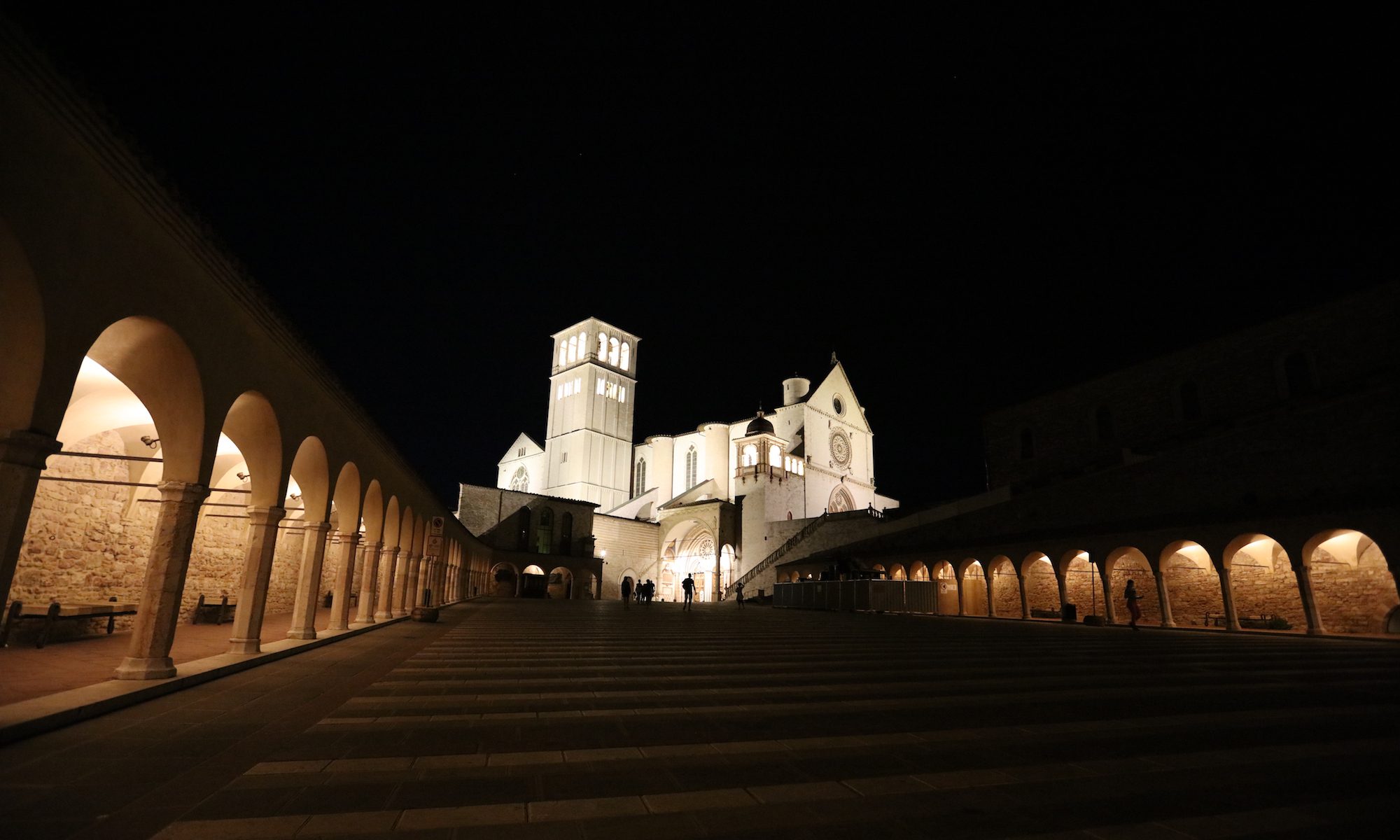
The Transformation of the person by divine grace
The hand of the Lord was upon him,
a change of the right hand of the Most High,
that through him the Lord might give sinners confidence
in a new life of grace;
and that of conversion to God
he might be an example.
(Celano The Life of St. Francis 1:2)
Table of Contents
- Personality and Charisma
- The Transformation of the person by divine grace
- Introduction
- Personality
- Charism
- Personality and Charism
- Conclusions
- Bibliographical References
Rome, 29 September 2026
Feast of the Holy Archangels
Prot. N. 00607/26
To All the Friars
Personality and Charism
Dear Brothers,
The journey of preparation for the celebration of the 500th Anniversary of the Capuchin Reform has offered us the opportunity to return to the origins of our gospel vocation and to recall the fundamental characteristics of our “form of life,” while at the same time inspiring us to fan the flame of our charismatic identity. Although it is important to examine the normative documents of our religious family, seeking to adapt their content to these historical times in which we live, it is of fundamental importance that each of us examine, before God, our own lives and the ways in which we respond to the sacred gift of our vocation.
The Most High and the Supreme Good, in fact, has placed in our hands the gift of the Capuchin-Franciscan charism; He has entrusted its care to us, inviting us to bear abundant fruit: that is, to shape our lives by following in the footsteps of our Lord Jesus Christ (cf. Rb I:1), in the manner of Saint Francis of Assisi and all the Capuchin saints. To make this existential transformation possible, we must deepen our knowledge of ourselves and learn to subdue—as the Saint exhorts in his Admonitions—the enemy: that is, ourselves, with our vices and sins (cf. Adm X:2).
The resource we present here, Personality and Charism, stems from a reflection that emerged during the General Council’s assemblies; in fact, behind every conflict or scandal involving our religious family, there are individual brothers, each with his own personality. The reflections that follow are intended to remind us that every charism (and ours in particular), is understood as God’s action in a person’s life, and contains within itself the power necessary to transform that person’s life, as Francis attests in his Testament (cf. Test 1-2). For this to be possible, there is no doubt that the person’s complete commitment and a deep and vital relationship with the Most High are necessary.
We invite you to reflect on these considerations in silence, to ponder them personally and/or in community, allowing yourselves to be challenged by the Spirit of the Lord, who always urges us to change our lives. To the extent that each of us cherishes the charism we have received and allows ourselves to be transformed by the Lord, the flame of our charism will be rekindled throughout the Order.
We support you with our prayers and ask the Lord God to prepare us for a sincere and lasting change in our lives.
Br. Roberto Genuin
General Minister OFMCap.
The Transformation of the person by divine grace
Introduction:
1. One of the principle works of the General Minister, as an authentic successor of our holy Founder (Const. 12:1), with the assistance of the General Council (Const. 125:7), consists in promoting a creative fidelity to the charism (cf. Const. 6:1), and proposing concrete ways to incarnate our evangelical way of life with simplicity, and revitalize our apostolic testimony in the many regions and cultures where we are present (cf. Const. 6:3). The creative fidelity to the charism implies that all the brothers remember who we are, and how we are called to live in this world. At the same time, it clearly warns about those internal and external situations of the Order that threaten to debilitate, distort, or trivialize our charismatic identity.
2. The resource sent by the General Council about our charismatic identity claimed rightly, to remind the brothers of the Order of the fundamental characteristics of our way of life, and how they could be updated, both personally and in fraternity, keeping in mind the different cultural contexts where we are present. We hope that the brothers received this material with enthusiasm and that this material and reflections upon it have awakened the desire to fan the flame of our charism, and the longing to live our vocation as Capuchin Lesser Brothers more authentically.
3. One of the threats that can cripple us interiorly which has been identified in more than a few circumscriptions, regards the loss of interest in reading articles, books, or documents related to our way of life, and the scarce critical reflection that arises among the brothers. Maybe some brothers have not even read the material on our charismatic identity published last August, 2025. Despite this, we know than many brothers critically and assiduously read and eagerly receive these resources, which the General Curia and other bodies within the order, offer for study and reflection on our way of life.
4. Although the progressive loss of enthusiasm for reading could mean a true loss of the interior of the Order, perhaps because of the cultural influence of images, instant information, or the predominance of superficial content, there are other threats that quickly weaken the vigor of our way of life, like a drop of water that constantly beats against a rock, and go on to disfigure the beauty of our charismatic identity. On this occasion, we would like to mention one of the weaknesses that internally wounds our Capuchin vocation and propose some considerations that may serve to be attentive and vigilant, that the subtlety of this threat does not go unnoticed for many brothers, and continue distorting our way of life. [cf. Mk. 13:35-36]
5. The subtlety of this threat can be explained by the convergence of many different factors, namely, the supposition that it is clearly understood, taking its permanence and immutability for granted, the difficulty in understanding its dynamism and intrinsic capacity for transformation, the idea that it belongs to an area of knowledge outside of theology or religious discourse, and its absence in the brothers’ regular conversations. All these factors, among others, make the threat invisible and give it an unsettling power of influence that can often act in the shadows, creating a considerable impact that often affects the way that we live, and therefore, fidelity to our charism.
6. The silent threat is personality. Perhaps many are surprised to think that personality is a threat to our way of life, a surprise that could be explained by the assumptions that we have about it, and by the different meanings that this word has for every one of the brothers. For some, this has to do with a reality assigned at the moment of birth, perhaps even before conception, that determines the way of being and acting of a person from the start to the end of their life; for others, this would be a type of familiar and social imposition that restricts personal freedom and generates oppression; others will think that it has to do with a strategy for adapting to different situations, acquiring different forms depending on the context and the person’s abilities; others, then, will remain indifferent before the question and would downplay its importance.
7. It is not an easy task to understand the meaning of the word personality. Nor does it become easily understandable how it could be considered a real threat to authentic living of our charismatic identity. Despite the apparent incompatibility of personality and charism, having to do with the constructs which supposedly would be treated by distinct disciplines, it is not worth ruling out the mutual implication and its possible dynamic interaction. For that reason, we believe that a well-considered and documented reflection on the issue could offer some valuable elements to understand what is the meaning of the word personality, and how it could affect living out our charismatic identity.
8. In order to achieve this purpose we must establish a fruitful dialogue among different disciplines, appreciating and respecting their own objects of study and recognizing the validity of their findings. It is then worth stripping ourselves of all prejudice that impedes recognition of the contributions of other disciplines, and seeking, in the midst of what is possible, those compatible elements that allow a certain bond of reciprocal understanding which, on the other hand, broadens our habitual way of understanding the meaning of the words personality and charism. Let us begin by saying that they are not two mutually exclusive or incompatible terms, given that they do refer to one reality where they converge, that is, in the human being. It would be impossible to consider the meaning of the word personality without referencing the person, in the same way that it would be quite complicated to understand the meaning of the term charism without considering the human person as the recipient of a free gift that comes from on high.
9. The personal journey of Francis of Assisi can show the convergence of personality and charism. Celano, as we will see, offers a description of what we can term the personality of Francis before his conversion, and at the same time, the progressive transformation of his person by divine grace. This is, without a doubt, a key for Franciscan reading that will offer us worthy elements for understanding the meaning of the words personality and charism, as it will provide the necessary arguments to justify how personality could become an obstacle in living our way of life.
10. In the first place we will seek the meaning of the words personality and charism. We will try to offer a meaning that gathers and synthesizes what has been reflected upon each of the terms in its respective cultural and academic traditions, indicating the supporting bibliography. Once the corresponding meaning has been clarified, an attempt will be made to establish a fruitful dialogue over each meaning to show how personality can affect, and in some cases distort living our charismatic identity. All of this will be read through a Franciscan lens, that is, taking into account the biographical journey of Francis of Assisi and his corresponding written testimony.
Personality
11. Words tend to have a circumstantial origin and tend to be related among themselves. This seems to be the case with the words person and personality. To understand the meaning of the latter, it is necessary to understand the sense of the former. The term person dates back to Greek theatre and at first indicated the mask used by the actors to represent publicly recognized qualities of an individual. Related to the Greek word πρόσωπον [prósōpon], Latin culture coined the term person to refer to the mask used in theatrical representations. Some popular etymologies proposed that the word person was composed of the preposition [per] and the Latin verb [sonare], acquiring the meaning to sound through, referring to the masks that amplified the actors’ voice.[1] The term personality, personalitas in Latin, would be composed of the noun person and the suffix [litas], giving it the meaning of qualities or characteristics of a given person.[2]
12. Personality, thus understood, would not refer to a specific characteristic of a person, but to a combination of qualities or characteristic roots that give consistency, unity, and identity to that person.[3] The following definition of personality seems to confirm this first approximation of its meaning:
[…] Personality is a dynamic organization of psychological systems of an individual that influence his or her conduct and characteristic thoughts in different situations.[4]
13. This definition proposes an understanding of personality as a dynamic organization of various psychological systems. The Latin verb organizare,[5] whence comes the word organization, refers to the act of joining various parts into one functional whole, which suggests that personality would be a type of system joining various dimensions to make up the unity and consistency of one person. The idea that a dynamic organization related to personality grants someone a series of possibilities that free them from determinism or from immutability, opening space for self-understanding in terms of process and constant updating. Personality, according to this idea, must be understood as the possibility and project, which supposes an openness to the novel and the ability to incorporate different ways of adjusting in life.
14. If this conception of personality proved suitable to understand the concrete reality of a person, there would be no place for self-referential expressions like that’s how I am, and I’m not going to change, or popular phrases like true to form to the very end referring to other people. These expressions would deny, in principle, the possibility of a personal transformation, and in the end, would reveal the compliance, to avoid the word mediocrity, of a person of a person before themselves and the resignation of many before others. Personality defined as possibility would, on the other hand, allow for a meaningful link in meaning with the Biblical concept of conversion.[6] The invitation to be born again that Jesus makes to Nicodemus must be understood from the perspective of conversion, that is, as a process of transforming one’s very personality. [Cf. Jn. 3:3]
15. Transformation of personality would refer to the process of reorganization, rearrangement, and updating the dimensions or parts that make up the whole of the system. It would not, then, be a matter of a radical suppression or denial of personality in its current state, but rather of a progressive rearrangement of the constituent parts from the demands and conditions of different vital contexts in which a person participates. It seems fitting to indicate, even in summary, the dimensions that constitute personality as it is understood as a system. They are: bodily, emotional, cognitive, behavioural, and the transcendent. These dimensions possess a common characteristic: they are transformable. In fact, if we focus our attention, our bodily dimension has experienced a notable transformation since we were an embryo to the present moment, and will continue transforming until the visit of Our Sister Bodily Death. Bodily transformation, following this example, has had and continues to have a notable effect in the other dimensions that constitute us as persons.
16. To deny this transformative quality of the dimensions that make up our personality would be equivalent to failing to an unawareness of the renewing power that pushes for transformation of life as a whole, and at the same time, it would justify a stasis that petrifies life and impedes growth. Some words that have entered into our vocabulary tend to rightly reaffirm that immutability that many cling to so they may argue the impossibility of an authentic personal transformation. Think, for example, of the word temperament. For some it is the same as what was established from the beginning, that which does not allow for any modification or transformation.[7] Despite these considerations, the word temperament seems to have another meaning according to its etymological origin. Derived from the Latin verb temperare, which indicates the act of mixing in right proportion,[8] it refers more to the quality that gives a certain stability to a personality, rather than to one of its innate, and therefore constitutive and permanent, components.
17. The temperamentum, understood as a stabilizing personality trait, would establish a certain dynamic equilibrium[9] in the process of organizing the systems that intervene in the makeup of a personality. A stabilization that tends to be identified with the fixation of a specific personality, and from there personality and temperament appear to be interchangeable terms in their meaning. To affirm that a temperament is a stabilizing quality would mean that personality must be understood as a permanent movement that seeks out an equilibrium between permanence and transformation, which would in turn explain the tendency of some personalities to a fixation [permanence] on their characteristic roots, and at the same time, the possibility of a transformation that characterizes another types of personalities. Temperament, then, is not equivalent to a biological determination,[10] but it rather refers to the possibility of updating, and the self-regulating of the whole living being.
18. This quality of providing an equilibrium to personality presupposes the presence of various constitutive dimensions that interact among themselves in a permanent way, as they reciprocally affect one another. What happens in the body has an effect on the emotional, cognitive, behavioral, and transcendent, according to the dynamics of those systems, from which it is inferred that personality is in constant movement and permanent search of equilibrium. To affirm that personality is in constant movement does not necessarily mean that there is a lack of stability or that it lacks continuity in time. Normally we have the sense of being the same person despite many transformations we have experienced in our life’s journey. To understand personality from a systematic perspective[11] does not constitute a threat to our personal identity, but rather an opportunity to become conscious agents of our own transformation as persons.
19. This personal transformation does not exclusively obey the conscious action of the same person, wherever our infancy and adolescence have in a large part put us under the influence of many distinct people and circumstances. Members of our family, school classmates, friends from the neighborhood, neighbors, or university classmates and coworkers, just to mention some significant groups of people who have interacted with us. All of them have played a part, whether we admit it or not, in our life’s journey, and for better or for worse, they have marked our personality by their words, gestures, reactions, and behaviors. This mark or print that they have left in me, and which in some way has given form to my own personality is what has come to be known by the term character.[12] It does not have to do with a characteristic of our personality, like when someone is called rough or delicate in their character, but rather all the impressions that have molded our particular way of being and relating with others throughout our entire biographical trajectory.[13]
20. Human personality is a complex, dynamic, and mysterious reality, composed of many dimensions that constantly interact among themselves, and exposed to a wide context of influences in permanent integrated movement by people and circumstances. It is not definitively closed off, nor does it remain unchangeable. Its dynamism gives place to the emergence of novelties and favors the incorporation of new qualities. Personality is a flexible reality that allows for renewing and learning that enriches and completes a person, pushing them to become a better version of themselves. This way of understanding personality frees people from the fear of their own life’s transformation, and from the temptation to remain stagnant in one way of being and being in a repetitive, predictable, and sterile world. It also makes it possible to commit to ongoing conversion, understood as a constant renewal of the person guided and enlightened by the Spirit of the Lord.
21. Personality, then, could be understood as the habitual way in which a person tends to organize, process, and express different dimensions that establish him as such. It refers to the way that a person relates with their own body, welcoming or rejecting it, taking care of or neglecting it, connecting to or disconnecting from it. It also references the way of processing emotions, governing them or allowing oneself to be governed by them, recognizing them or being unaware of them, integrating them or being unintegrated by their effects. It refers to the style of cognitively processing information, exaggerating or minimizing it, validating or negating it, assuming it as one’s own or considering it foreign. Finally, it also refers to the posture that one assumes before the mystery of the whole, opening oneself to the transcendent or closing oneself within immanence, trusting in someone greater than oneself or only in one’s own strengths, giving way to hope, or falling into pessimism devoid of hope.
22. The personality of each human being is an original and unique combination of all of these dimensions shaped historically and biographically. Hence the difficulty, to avoid the word impossibility, of finding two identical personalities. The reference to history and biography is necessary to understand the process of forming one’s own personality, since history refers to the conditions, circumstances, and persons who influenced the shaping of a personality, while biography indicates the particular way in which every person, consciously or unconsciously, has articulated this entire historical influence in a coherent and functional way, giving self-awareness and strengthening one’s personal identity.
23. The term identity is related to the subjective experience of continuity through time,[14] allowing a person to recognize themselves and be recognized and identified by others as a well-differentiated person. Personal identity refers, then, to self-consciousness that is recognized in a manner of interior dialogue in which a person dialogues with his or herself, evaluates lived situations and establishes conclusions, defines priorities, calculates consequences, notices mistakes, judges the behavior of others, designs engagement strategies, promotes an idea of his or herself, and defines a plan of behavior.[15] Personal identity understood as self-awareness, that is, the ability to recognize that we ourselves are the ones who perceive and manage that which occurs in the inner world, does not emerge in isolation or outside of a specific relational context, rather thanks to it. Personal identity would correspond to a continual process of interior self-management that would show itself outwardly through personality.
24. Self-awareness, that is, the ability to understand all that which occurs interiorly in any circumstance, and to recognize the consequences of one’s own behaviors, allows a person to identify the different relational scenarios that make up human life and insert oneself in them freely and willingly. The relationship with oneself, with one’s peers, with creation, and with the divine mystery are the relational scenarios that shape and enable a truly human life, and without which it would be very difficult to understand the process of forming a human personality. Without relational scenarios the emergence of human personality would not be possible. Every person, in turn, plays a part in these relational scenarios and participates in them, creating a reciprocal feedback loop in which a person is influenced by them and, at the same time, influences them. When this influence is favorable, it fosters a healthy and balanced personality, but when unfavorable, imbalances and changes arise in a personality that some diagnostic classifications rightly name personality disorders.[16]
25. The uninvited, aggressive or even abusive intrusion of a person into the life of another, be it through vulgar words or disrespectful physical contact, do not only make for significant distress, but it can also provoke the onset and later manifestation of mental or personality disorders.[17] This is what is meant by the word trauma. Derived from the Greek verbs τρώσσω [trōssō], to be wounded, and τρωθῶ [trōthō], to sustain damage, τραῦμα (trauma) translates wound, blow, or injury,[18] which usually presumes a relational context. While trauma can be a car accident or a weather-related disaster, this term often indicates the harmful intervention of a human being who brings chaos and confusion into the life of another, causing a series of difficulties in their personality.
26. The word personality refers to the complete human reality and seeks to synthesize the variables that shape and form a person’s identity. While the term person was used by Tertullian in the 2nd and 3rd century to refer to an ontological difference in the inner life of the Trinity,[19] one would have to wait until the 17th century to find the modern use of the word personalitas.[20] This bibliographical information allows one to infer that neither the word, nor its modern meaning were used in the 13th century, but this does not prevent us from referring to Francis of Assisi’s personality, or other famous people who came before him, especially if we have documents from that period which, in their own way, describe some of the personality traits of Bernardone’s son. Thomas of Celano writes:
In the city of Assisi, which is located in the confines of the Spoleto valley, there was a man named Francis. From the earliest years of his life his parents reared him to arrogance in accordance with the vanity of the age. And by long imitating their worthless life and character he himself was made more vain and arrogant.
[Celano The Life of St. Francis I:1]
This is the wretched early training in which that man whom we today venerate as a saint—for he truly is a saint—passed his time from childhood and miserably wasted and squandered his time almost up to the twenty-fifth year of his life. Maliciously advancing beyond all of his peers in vanities, he proved himself a more excessive inciter of evil and a zealous imitator of foolishness. He was an object of admiration to all, and he endeavored to surpass others in his flamboyant display of vain accomplishments: wit, curiosity, practical jokes and foolish talk, songs, and soft and flowing garments. Since he was very rich, he was not greedy but extravagant, not a hoarder of money but a squanderer of his property, a prudent dealer but a most unreliable steward. He was, nevertheless, a rather kindly person, adaptable and quite affable, even though it made him look foolish. For this reason more than for anything else, many went over to him, partisans of evil and inciters of crime. Thus with his crowded procession of misfits he used to strut about impressively and in high spirits, making his way through the streets of Babylon.
[Celano The Life of St. Francis I:2]
27. Without getting too far into the historical accuracy or potential hagiographical intentions of the author regarding this description of Francis’ personality, the cited document allows one to identify some personality traits that set the young Francis apart from other people of his time. His inclination to vanity, his drive to be the first in splendour, his use of vain words, his preference for soft and comfortable clothing, his capacity for business and prodigality with his resources, his human touch, cleverness, and extreme friendliness, his inclination towards the corrupt, and the arrogance of his attitude, are some of the personality traits that characterized Francis and gave him his identity. The information that Celano provides also offers a cultural and familial context that would explain the historical and biographical shaping of the son of Bernardone:
[…] A most wicked custom has been so thoroughly ingrained among those regarded as Christians, and this pernicious teaching has been so universally affirmed and prescribed, as though by public law, that, as a result, they are eager to bring up their children from the very cradle too indulgently and carelessly. For when they first begin to speak or babble, little children just born are taught shameful and detestable things by gestures and utterances. And when the time of weaning arrives, they are compelled not only to say but to devote themselves to things full of excess and lewdness. Compelled by the anxiety of youth, they are not bold enough to conduct themselves honourably, since in doing so they would be subject to harsh discipline. A secular poet puts it eloquently: Since we have grown up with the training of our parents, all sorts of evils pursue us from our childhood.” This is quite true, for the desires of parents are more injurious to their children, the more they yield gladly to lax discipline. But even when the children advance a little more in age, they always fall into more ruinous actions by their own choice. For a flawed tree grows from a flawed root; and what was once badly corrupted can only with difficulty be brought back to the norm of justice.
[Celano The Life of St. Francis 1:1]
28. The historic character of Francis’ personality is identified in this description, that is, the influence of his cultural context and the educative models which were around at the time, above all where it refers to the way parents treated their children. The biographical character of his personality is also recognized when it says how this same person, now older, continues bringing these cultural characteristics into his own personality by his own initiative. Hagiography, perhaps without intending to do this consciously, exemplifies the meaning of the word character when it says that children learn through signs and words, and that they are obliged to say and do immoral and wanton things, highlighting the influence that parents have over their children in the formation of their personality.
29. The following statement deserves some special attention: from a damaged root, a sick tree is raised up, and what at one point has been perverted, only with great difficulty can be brought back to the path of goodness. It would seem that the hagiography may make one understand that what is learned in a cultural and familial context can seldom be unlearned, which for many brothers would justify their upholding the impossibility to transform their personality and maintaining a lack of commitment in the process of personal conversion. Nevertheless, the same hagiography asserts: these are the sad beginnings that shaped this man from childhood, (the one whom today we revere as a saint, because he truly is). Note the emphasis upon what was learned from childhood and seemed immovable, and how a profound transformation of the person is shown to the point of being recognized by others as a saint. This confirmation allows one to infer that a transformation of a human personality is possible. How this transformation is possible, what are the necessary conditions, and who would be the main person responsible for it, are some of the questions that will be addressed in what follows.
Charism
30. The Apostle Peter affirms: As each has received a gift (charism), employ it for one another, as good stewards of God’s varied grace (1 Pt. 4:10). The word charism comes from the Greek χάρισμα [charisma], and literally means a gift of grace, coming from the word χάρις [charis], grace, which means an undeserved favour. The Apostle Paul uses the word with the same meaning in some of his letters.[21] Both in the human realm as in the context of faith, a charism presupposes an interpersonal relationship in which one of the members freely offers a gift and the other receives it without any merit, reinforcing the idea of generosity and the concept of gratuity. In the letters of both the referenced apostles, these gifts received have an inarguable finality: the common good and building up the body of Christ (cf. 1 Cor. 12:7; Eph. 4:12).
31. The idea of a free gift offered by the Spirit to a person who contributes to building up the believing community makes one think of a specific quality, just as the same Paul suggests: wisdom, knowledge, faith, prophecy, discernment, speaking in tongues, among other charisms (1 Cor. 12:7-10). These graces, considered in detail, are incredible realities, that is, they cannot be quantified or measured, and as such they are labelled as spiritual gifts (1 Cor 12:1). They are not, then, objects that can be contemplated with the eyes or touched with the hands, or which can be laid out with a specific goal. They are, seemingly, qualities that arise in the context of a close interpersonal relationship between the Spirit and the human person. The Poverello appears to suggest this in his Testament:
In this way did the Lord give me, Brother Francis, the grace to begin doing penance: when I was in sin, it seemed too bitter for me to see lepers. And the Lord Himself led me among them and I showed mercy to them. And when I left them, what had seemed bitter to me was changed into sweetness of soul and body. And afterwards I delayed a little and left the world. And the Lord gave me such faith in churches that I would pray with simplicity in this way and say: “We adore You, Lord Jesus Christ, in all Your churches throughout the whole world and we bless You, because by Your holy cross You have redeemed the world.”
[Testament 1-5]
32. Francis refers to many gifts that the Lord has freely given him: penance, mercy, and faith. These charisms, beyond just being external realities that are poured into the soul of a human being, are personal qualities that emerge in the intimacy of a relationship with God. In other words, the human being who relates intimately with the Lord becomes imbued with his divine qualities and learns to act like Him. That is what occurs in contemplation, such as it has been understood in the Capuchin tradition and been made explicit in the Constitutions of Saint Euphemia, according to what was displayed in the contributions of the document on Our Charismatic Identity (52-62).
33. Penance, mercy, and faith are then personal qualities which Francis gained in his relationship with the Lord, qualities that have a double purpose: strengthening this interpersonal relationship and prolonging the same action of God within time. Penance allows Francis to remain always in the presence of the Lord and not let himself be seduced by the temptations that would separate him from God: … return to me with all your heart with fasting and weeping and mourning. Rend your heart and not your garments. Return to the LORD your God (Joel 2:12-13; Ez. 33:11; Hosea 14:1-2; Is. 55:6-7; Lk. 15:18-20). By faith, Francis trusts entirely in his Lord and confidently abandons himself into His hands: Thou dost keep him in perfect peace, whose mind is stayed on thee, because he trusts in thee. Trust in the Lord for ever, for the LORD God is an everlasting rock. Blessed is the man who trusts in the Lord, whose trust is the Lord. When I am afraid, I put my trust in thee. In God, whose word I praise, in God I trust without a fear. What can flesh do to me? (Is 26:3-4; Jer. 17:7; Ps. 56:3-4).
Mercy pushes Francis to care for lepers, in the same way that the Lord cares for all who need Him, fulfilling those words of Jesus: Be merciful, even as your Father is merciful (Lk. 6:36).
34. Francis attests to other gift he received which broadens his relationship with the Lord and allows him to live in the fulness of the Gospel. And after the Lord gave me some brothers, no one showed me what I had to do, but the Most High Himself revealed to me that I should live according to the pattern of the Holy Gospel. The gift of brothers did not just free Francis from the temptation of turning in on himself, but it also allowed him to communicate such infinite richness that he had tasted in his own intimate relationship with the Most High to other human beings. The gift of brothers helps Francis to understand that the Gospel is not a simple proposal to be lived in solitude, but rather in fraternity, and thence comes the confession of the Poor Little one: the Most High Himself revealed to me that I should live according to the pattern of the Holy Gospel. This revelation amounts to seeing with the same eyes as the Most High,[22] that is, to understand what He wanted and had given to Francis and the brothers. [Testament 14-15]
35. The witness of Francis would help us to understand that charisms are not foreign realities or distinct from the God who sends them to us and freely offers them, just as someone may gift a book or some chocolate, but rather personal qualities that we apprehend when we relate intimately with Him, as one who is completely drenched from being submerged in a body of water. From this perspective, it is God who gives and offers Himself to enrich the life of a human being, leading him into fulness and continues, through the human person, his saving work in history: Truly, truly, I say to you, he who believes in me will also do the works that I do; and greater works than these will he do. It is the Most High in person who compassionately approaches Francis, freely proposes an interpersonal relationship, and fulfills His saving work within him, as it is written in the hagiography [Jn 14:12]:
The hand of the Lord was upon him,a change of the right hand of the Most High, that through him the Lord might give sinners confidence in a new life of grace; and that of conversion to God he might be an example.
[Celano The Life of St. Francis I:2]
36. The hagiographical text reinforces the idea of a personal intervention of the Most high in the process of Francis’ transformation, referring to the hand of the Lord, and the right hand of the Most High. It is the Lord in person, with his own hands, who fulfills Francis’ transformation, just as a potter who takes clay into his hands. This intervention that the Lord makes in Francis is, by all accounts, a transformation of his person, and we could even say, of his personality. The hagiography refers to this process of personal transformation in the following terms [cf. Jer. 18:4]:
From that day he began to regard himself as worthless and to hold in some contempt what he had previously held as admirable and lovable, though not completely or genuinely. For he had not yet been freed from the bonds of vanities nor had he thrown off from his neck the yoke of degrading servitude.
[Celano The Life of St. Francis II:4]
Changed in mind but not in body, he now refused to go to Apulia and was anxious to direct his will to God’s. Thus, he retired for a short time from the tumult and business of the world and was anxious to keep Jesus Christ in his inmost self. Like an experienced merchant, he concealed the pearl he had found from the eyes of mockers and selling all he had, he tried to buy it secretly.
[Celano The Life of St. Francis III:6]
He was burning inwardly with a divine fire, and he was unable to conceal outwardly the flame kindled in his soul. He repented that he had sinned so grievously and that he had offended the eyes of majesty. While his past and present transgressions no longer delighted him, he was not yet fully confident of refraining from future ones.
[Celano The Life of St. Francis III:6]
37. The realization of his own sin, renunciation of his vain past, his new way of seeing himself, his retreat from the noise of the world, the search for the divine will, and the desire to have Jesus Christ in the most intimate depths of his being are, without a doubt, indicators of a profound process of personal transformation on its course, a process which will reach its maturity in the total conformity with Christ and full communion with the great and admirable Lord. The compelling nature of this documented evidence makes it impossible to sustain the general idea among the brothers of the Order, especially among those with long personal histories, that transforming one’s personality is extraordinarily difficult, if not impossible. To affirm this idea would be tantamount to distrusting the transforming power of the Most High, and at the same time, would show forth levels of complacency and personal that are found in quite a few brothers.
[PG 6]
38. Absence of a deep and meaningful relationship with the Most High would explain many troubling and problematic situations that wound and hurt our way of life in the entire Order. This absence, as we believe and have verified in the meetings of the General Council, forms a radical problem from which many painful, lamentable, and shameful situations arise among us. It would seem, with the due regard for the many brothers who sincerely seek the Lord, that many of us live et si Deus non daretur, as if God did not exist, which shows itself in poverty, in our personal and fraternal prayer, the dryness of our fraternal relations and the primacy of personal projects in our life, just to mention a few of the symptomatic traits that continue to occur in many parts of our universal fraternity. This pushes us to return to the Lord if we really desire a true transformation of our person, and consequently, our way of life.
[cf. Hosea 14:2]
39. Having arrived at this point we are in the right condition to respond to the concerns that arise before beginning this section. The principal one responsible for human transformation is the Lord who, with the person’s good disposition, is able to transform the dry land into springs of water. In addition to a good disposition, the human being is called to fulfill specific tasks that contribute to the transformation of their personality, such as prayer, penitential practices, and works of mercy, all of this linked with discipline and perseverance. These would be the required conditions so that a true transformation of the person can occur. How exactly this transformation occurs remains a mystery, though what happens is like what Jesus says about the seed that is sown upon the ground that should sprout and grow, he knows not how. What can be no ticed, though, are the effects of such a transformation; since you will know them by their fruits.
[Cf. Is. 41:18; cf. Mk. 4:26-27; cf. Mt. 7:16]
40. We would like to finish this section with a clarification about the word charism as it applies to our way of life. In the previous work about our charismatic identity, which we shared with all the brothers of the Order, characteristics were mentioned that give identity and coherence to our way of life, characteristics that ought to be incarnated by each brother so that the charism received from the Lord remains alive and finds new ways of being updated. These characteristics can be classified in two [2] intentions that the Lord would have when he gives us his gifts, that is, growing in our relationship with him, and continuing his saving work in history.
41. To grow in our personal relationship with the Lord we would have to incorporate penance, silence and solitude, mental prayer, contemplation, detachment, austerity, and minority into our life, charisms that would progressively guide us to conformity with Christ and Francis. To continue His saving work, manual labour, mendicancy, fraternity, the ministry of mercy and evangelical preaching would help us. All of this done through pluriformity, which is understood as the simultaneous incorporation of all these charisms into one and the same way of life. By Capuchin charism, then, we ought to understand the integration of all these gifts in the unity of a single way of life that gives us a charismatic and institutional identity. With this clarification we have the necessary elements to establish a relationship between personality and charism, as it is suggested in the title of this document.
Personality and Charism
42. Reflecting on the Franciscan charism or our charismatic identity is familiar to many brothers in the Order and for others, it makes for a necessary task if we want to revive our way of life in this moment in history. The same cannot be said of personality, since, as it has already been said, it would seem to be a topic with no substantial link to charism, except in houses of initial formation where it may have some minimal importance. It is probable that those who have read thus far are wondering still what type of link could exist between personality and charism. The following considerations, clearly stated, have a fundamental goal: to nurture a personal reflection among the brothers that allows them to discover within themselves how personality and charism come together.
43. We said in the introduction that the General Minister and his council have the task of charismatically encouraging the brothers and warning them, when it is deemed appropriate, of the internal and external threats that distort our way of life and mar the beauty of our charism. With this opportunity, we want to send a warning about an internal threat that is justly named personality. Is it possible to consider personality as a threat to our charismatic identity? We hope to respond affirmatively to this question. Why call it an internal threat? For many reasons: because it involves the inner life of each brother, at times causing him significant distress; because the personality of a brother can considerably affect the internal life of a local fraternity, and even be a real problem for a circumscription or a particular church; because the personality of a brother can become the sole criterion defining his way of life, ranking above evangelical and charismatic criteria; and lastly, because human personality is not exempt from difficulties and calls for a ongoing transformation.
44. The word personality does have a favourable or unfavourable connotation, since it refers to the particular way that each brother has organized, historically and biographically, the different dimensions that form him as a person. The problem becomes evident when a personality is classified by a specific adjective: explosive, evasive, conflictive, combative, narcissistic, dependent, obsessive, perfectionist, introverted, among other classifications used in everyday language or in professional circles. Those who have lived, be it in their family of origin or in the friary, with a person who presents some of these personality traits, knows that it is not easy to establish a healthy fraternal relationship, nor work together for a common goal, just to mention a couple aspects of community life.
45. Time and again, we have found in our meetings of the General Council, that the most sensitive and contentious problems in different circumscriptions and local fraternities are related, generally, with specific brothers and their particular way of being, relating, reacting, and proceeding in different dimensions of our way of life. This finding has encouraged us to warn about the internal threat that these types of personalities present to living our charismatic identity. For this reason, we present the following, based on what we have seen and heard, a general description of those types of personality that can be problematic and form a serious internal threat to our way of life.
46. The following descriptions have a pedagogical character, since they do not describe specific brothers, but offer a general framework grouping various personality traits of a fictional character, much like Francis himself proposed when he spoke of the perfect brother. Fiction, on the other hand, does not imply invention, since these personality traits are able to be found in the lived reality of many circumscriptions and local fraternities. We exhort all the brothers to attentively read these descriptions, and to humbly and courageously recognize, before the Lord, if any of these personality traits characterize his way of being and living our way of life. Make an effort to read this self-critically, much like an examination of conscience, so that you do not go on thinking of other brothers that live or work with you. Do not let your heart be discouraged, brothers, if you recognize some of these traits in your own life, since the Most High, just as he did with Francis, is ready to take you into his hands and make all things new (cf. Rev. 21:5). To recognize one’s own personal reality, on the other hand, is the necessary condition for the Potter to do his greatest work in each of you.
[A Mirror of the Perfection V:85]
47. Gonzilio is a brother coming from a well-off family of good taste. He frequently speaks of places he has visited and famous people he has met. He often visits with his childhood friends and accepts invitations to shopping malls and other places of prestige. He takes a lot of pride in his physical appearance and dedicates many days of the week to practicing his favourite sport. He has a strict diet that often differs from what is normally prepared at the friary. He is kindly and attentive to detail, although it is difficult for him to carry a conversation with the brothers and he does not like to be questioned. The brothers rarely see him during the day, and his participation in fraternal activities is best said to be scarce. In local chapters he intervenes to ask for what he needs, and while others speak of common affairs, he is scrolling on his phone and responding to messages. The brothers do not feel comfortable with his way of life, but regardless, they do not dare question him since they already know his evasive and sometimes aggressive reactions. He cannot be counted on to attend fraternal activities unless they pique his interest. The fraternity’s chapel is place he visits least of all.
48. The case of Rocogno has generated a lot of discomfort, more than anything for those who have been his superiors. Little is known of his family and his personal history, and he is known to be reclusive and tends to keep to himself. Everything about him is a mystery. He is very skilled in business and he knows how to manage projects of a social character, so he knows many people whom he can speak with about business and investments. Every so often he uses a vehicle that does not belong to the circumscription, and when he is asked about the vehicle, he often says that it belongs to a friend who has loaned it to him for a personal matter. Those who frequent the friary chapel say that Rocogno owns many apartments and has some even more lucrative businesses, but none of the brothers, not even his superiors, have approached this topic directly, perhaps because his own abilities in management have benefited the circumscription, and in particular, the some of the brothers’ families. He is not transparent with how he manages his money, and when the guardian asks him for an account of his actions, he offers confusing information that does not coincide with the registered accounts. The brothers do not trust Rocogno and do not see him as a true religious, but more of an opportunist. He seems to have issues with his use of alcohol, but nobody speaks openly about it. Sometimes he takes part in liturgical prayer, and he is seldom present in the refectory, with the pretext of attending to some business.
49. Luxius, as the etymology of his name would imply, seems to have a great need to shine. He has many social skills and is charming with family and friends, but not so much with the brothers. All of them refer to Brother Luxius as a model pastor, since he knows how to manage community projects and he accompanies many parish groups. He is, as many in the par ish say, a true gentleman, to whom everyone must defer, since everything is done as he wants, when he wants. When someone does not agree with him, he tends to react angrily and often distances himself from people, refusing to talk to them for days on end, hoping that his offenders recognize their errors and apologize to him. He uses his homilies as an opportunity to vent and makes passive aggressive comments to those listening. He does not schedule parish activities with his brothers in the fraternity, nor does he give an account of his spending. He is often absent from the scheduled fraternal activities as the brothers say he is already committed to some parish group or activity. Every Monday he sleeps late and leaves the friary all day, without the guardian knowing where he is or who he is with. Luxius is a good parish administrator, and he does not see himself doing anything other than working as a pastor. Some brothers have questioned whether his way of life is compatible with our charismatic identity, to which he often responds indifferently.
50. Enaltus was the provincial minister and has been guardian many times. The brothers remember him as authoritarian, and at times, imposing his own will. He often has explosive reactions when he is contradicted and can sometimes even be rude. He seems to be convinced of his predestination as superior, and chosen to command others, and so he speaks to the brothers as if they were subordinate to him. He harshly criticizes provincial ministers who have succeeded him and he complains about the horrible administration they have executed. He often makes disparaging remarks about nearly all the brothers he knows, since according to him, nobody does things well, which is to say, as he has done them. He does not realize that in disparaging others he is defending himself. He often assumes the attitude of a boss or employer, and has even yelled at brothers and helpers in the fraternity. Brothers avoid him, since they often fear being disparaged or treated as subordinate. In local chapters he speaks vehemently and acts as if all decisions must be approved by him, and so the brothers end up doing what he wants. Brothers say that Enaltus never stopped being the provincial minister, since he acts as such in almost everything he says and does. Nobody wants to be his guardian, and provincials avoid him at all cost, since he always scolds and criticizes them for not doing what he thinks should be done in the circumscrip tion. He is often alone, since almost nobody gets close to him.
51. Marcizo is a true mystery. In the mornings he enthusiastically greets all the brothers and at midday he does not say a word to them. Nobody knows when to talk to him, since his reactions are often unexpected. Sometimes he responds cordially, other times he stays quiet, and still other times he raises his voice and yells, as if he were greatly offended. He makes comments under his breath about the brothers and makes fun of them, sometimes subtly, other times openly. Some of his reactions leave his own people and strangers bewildered, not knowing what to think or how to act. He often complains about everything and nothing seems right to him. When he speaks up in fraternal meetings, he proposes solutions to all the problems, but the guardian cannot count on him to realize them. He is very busy with his studies, conferences, and other virtual activities and he is recognized, virtually, for his ability to systematize and his academic rigor. He is very worried about his heath and constantly changes his diet, saying that his body requires special care. The brothers often walk on eggshells around him so that no word or gesture may provoke one of his regular and disproportionate reactions. The brothers also affirm that Marcizo cannot even tolerate himself and seems to have no control of his emotions. It has been assumed that he is in a romantic relationship since he is often heard talking on the phone, and without warning, he leaves the fraternity. It is difficult to establish a trusting relationship with him.
52. In all these fictitious cases, constructed with pieces of reality, we find normal personalities, that is, daily ways of being, reacting, relating with others, and proceeding in different dimensions of our way of life. Despite the normality of these personalities, the reading will be able to recognize that they become conflictive and make living our charismatic identity difficult. They are, ultimately, personalities that have not been permeated by the charism and have not experienced a meaningful transformation in the respective journey of initial and ongoing formation. A personality that has not been imbued by the charism forms, according to our perspective, a true problem for the interior of the Order, a problem that has not been visible enough and remains silent, being considered a strictly personal question in which no one, not even major superiors, could intervene. This seeming untouchability of one’s personality, on the other hand, would amount to disclaiming a real problem and refusing to look for viable solutions.
53. The fact that a brother and his corresponding personality have not been imbued with the charism could be explained by considering different factors. In the first place, the identification between the charism and information about the charism, which would lead to a belief that understanding the definition of minority, by presenting a case, would amount to being lesser. Many brothers, in effect, know how to define what minority is, but even so, we do not always live as lesser. Secondly, the deficient formative strategies for incarnating these characteristics of our charism. Initial formation, in general terms, has insisted more in carrying out activities and adhering to schedules rather than the process of incorporating the characteristics of our way of life. Note our insistence on the word incorporation. With this word, we want to emphasize the process of placing in our body, that is, imbuing our bones, muscles, organs, face, and all that we are with the qualities of our charism. We do not need brothers who know how to speak about fraternity, we want to have brothers in whom the definition of the word fraternity is incarnated.
54. The absence of a deep spiritual life, that is, weakness in personal and fraternal prayer, would form the third factor that would explain the permanence of personalities that have not been imbued with the charism. The charism, as previously stated. Is a divine give through which we apprehend the divine qualities and prolong, within history, the saving action of God. This would not be possible without a deep and intimate personal relationship with the Most High, as it has been shown in the life of Francis. The absence of this personal relationship with God hinders the process of grasping His way of being and the incorporation of His divine qualities, allowing our own personality predominance over said relationship. In other words, the absence of God who continuously transforms our personal reality would leave an empty space that favours the consolidation of our personality, as it would have happened with Francis if he had not been ready to let himself be transformed by the Most High. Lastly, the influence of brothers who are characterized by an overpowering personality. These brothers, and their ways of life, often become points of reference for the youngest brothers, and models of life that many formandi aspire to emulate. The influence of these brothers, however, would explain an argument that is often put forward by the brothers in formation when they are corrected and called to live in accord with our charismatic identity. If this or that brother does it and nobody tells him anything, why can’t I do it? These overpowering personalities have a negative impact on the processes of initial formation and offer a testimony that is contrary to our evangelical and charismatic way of life.
55. A personality without God, impervious to his merciful action, self-centred, would not just become an internal threat to living our charismatic identity, it would also constitute a true enemy, in the words of Poor Little one, that destroys fraternity and lives in ongoing opposition to God. Although Francis uses both the noun person[23]a in and the personal pronoun I[24]b in his writings, he also uses other biblically rooted terms to refer to the sinful condition of human beings, and, of course, the frailty of the brothers. He states in Admonition X:
[…] There are many who if they commit sin or suffer wrong often blame their enemy or their neighbor. But this is not right, for each one has his enemy in his power,—to wit, the body by which he sins. Wherefore blessed is that servant who always holds captive the enemy thus given into his power and wisely guards himself from it, for so long as he acts thus no other enemy visible or invisible can do him harm.
56. The word body as Francis uses it in this exhortation has a direct relationship to the Greek noun σάρξ (sarx), which, in Pauline theology, refers not to the human organism, but rather the state of fallen humanity and its tendency to live far from God.[25] The term personality, which does not appear in the saint’s writings, could be related with the meaning of the word body, whenever any personality that has not been imbued by God tends to reaffirm its own centrality, impose its own will, and place itself above a relationship with his fellow human beings. The subjection of the body that Francis recommends in his admonition would equate to the transformation of a personality, which presupposes, as it has been explained, the disposition of a person to enter into an intimate relationship with God and be transformed by Him. Personality could therefore be considered a new way of referring to the same reality Francis meant by the word body, and Paul by the word flesh.
57. The richness of nuances inherent in the word personality has the theological and anthropological meaning of the term body used by Francis and also incorporates other dimensions that form the complex human reality. Keep in mind that personality is composed of various dimensions, namely: bodily, emotional, cognitive, behavioural, transcendent, and it is manifested in different relational scenarios, that is, in relationship with oneself, one’s neighbours, with creation, and with the divine mystery, as it has been explained in the preceding pages and shown in the descriptions of different personality types. These arguments urge us to believe that the word personality acquires, in the historical and cultural moment we are living in, a broader meaning than the word body, and as a result, following Francis, can be considered not only an internal threat to living our charismatic identity, but also a true enemy, as the saint says, which each of us is called to keep down.
58. The subjection of the body, or the transformation of personality, does not only require, as it has been said, an intimate relationship with the Most High and the right disposition of the person to relate to God, but also requires the capacity, courage, and humility to recognize one’s own personality and its effects in living our charism. Having arrived at this point we find ourselves at a stumbling block, that is, an obstacle that it is not easy to overcome, since many brothers, it would seem, find it very difficult to recognize and admit that their own personality can be a true threat to living our charism faithfully. This difficulty of self-awareness, recognizing the characteristics of one’s own personality, and admitting that it could affect the living of our charism is symbolized in the Gospels with the image of blindness.[26] Although biblical blindness may point the state of darkness in which people find themselves without divine revelation, it also encompasses the meaning of closed-mindedness and inability to understand by those who fail to see the reality around them, their own personal reality, through the eyes of God. Let us repeat one more time, we cannot open our own eyes if we do not enter into a profound relationship with Him who is the light.
[cf. 1 Jn. 1:5]
59. This blindness would not only mean ignorance of oneself or lack of knowledge of one’s own personality and its consequences for living the charism, but it would also help to understand the widespread existence of self-referential lifestyles within the Order. By self-referential lifestyle we understand that way of living that is based and structured upon one’s own criteria, personal needs and desires, individual projects, be they academic or work-related, the search for comfort and a good life, and a strong commitment to that which is strictly personal, all at the expense of fraternal life, or even more painfully, using fraternity as a means for one’s own individual longings and desires. It is not hard to find, on the other hand, a correlation between personality and self-referential lifestyles. Wherever there is a personality that is not imbued with the charism, there will necessarily be a self-referential lifestyle.
60. These self-referential lifestyles, on the other hand, form a sign of our time, whenever they are perfectly aligned with the culture of hyper-individualism.[27] This observation would reveal that quite a few brothers in the Order would be aligned with the cultural criteria of hyper-modernism than with the biblical and charismatic criteria that make up our way of life, which significantly weakens the prophetic power of our charism and makes us now qualified witnesses, no longer of the Gospel and Franciscan spirituality, but rather of the predominant culture. We need to remember that prayer of Jesus, they are not of the world, just as I am not of the world, to believe again in its meaning, return to the sources of our charismatic identity, and risk ourselves to conform our life to the Gospel and charismatic criteria that we claim to live. Otherwise, this internal threat presented by the self-referential lifestyles could metastasize, using an oncological image, and extend to all the ends of the order, causing it to deteriorate and undermining its vitality
61. The preparation to celebrate the 5th Centenary of our Capuchin Reform poses a favourable scenario to remember what is most fundamental to our charismatic identity and seek to incarnate the beauty of our charism. It is also an opportunity to bear witness before the world of the presence, fruitfulness, and vitality of our Franciscan and Capuchin spirituality, living in the world without being of the world. We hope that these considerations truly incite and manage to arouse a self-critical reflection on part of most of the brothers regarding the proposed themes, but more than anything, we hope that each brother may reflect, calmly and in the presence of the Most High, on his own personality, the self-referential lifestyles that he may have created, and of course, the effects that this all has on living our charism.
Conclusions
62. Complex, problematic, and controversial situations are addressed at every meeting of the General Council. All of this is understandable if we keep in mind that our Order is composed of weak, fallible human beings, rooted in the earth and striving for heaven, which explains the ambiguity of our human condition. The presence of these situations in our universal fraternity does not scandalize or discourage us, however, the consistency of such complicated situations challenges of, above all when they are connected to specific persons. This has led us to ask what the underlying problem would be, and how to find practical and attainable solutions. Responding to these concerns has resulted in this work that you have read and reflected upon.
63. In every discussion of the General Council a nascent idea has emerged, that each brother’s personality was involved in a contentious situation. There is no conflict without persons, it was asserted, and each conflict was intensified by the brothers involved in them. It was clear to us that the matter of personality had to be explored and analysed to better understand all the situations we are confronting. It was also understood that the personality-conflict correlation presented a serious threat to living our way of life, and for that reason, we looked to reflect on the connections between personality and charism which, intern, gave these considerations their name.
64. We could synthesize everything mentioned by saying a personality becomes an internal threat to living the charism, or, as Francis said, in becomes an enemy of fraternity, when it is not imbued with the presence of God, nor allows itself to be transformed by Him. Personality is a way of referring to the complex human reality formed by many dimensions that form, historically and biographically, a specific way of being, reacting, relating to, and acting that identifies a person, who lives and interacts in different relational scenarios that feed back into this process of configuration. Charism, on the other hand, refers to the personal qualities that are grasped in the inti mate relationship with the Most High, since, more than just referring to a specific gift, refer to the gift that God Himself to bind Himself to a person, enrich him with His presence, and prepare him to carry on His saving action in history. An intimate relationship with God enables a person to grasp his divine qualities [charisms] and to continue His way of relating with all creation through time. A personality devoid of charism, then, devolves into self-worship, the foundation of self-referential lifestyles.
65. We knew that a reflection upon these topics could arouse many different reactions among the brothers, nevertheless, we believe it was necessary to risk bringing this silent threat, which is seldom spoken about to light, since it is often taken for granted or avoided in conversation because of the discomfort it causes. We turn to the biographical journey of Saint Francis of Assisi, drawing on his personal witness to confirm that a transformation of the person, and therefore, of the personality, is indeed possible, just as it happened with him, so long as it is based upon an authentic and intimate relationship with the Most High.
66. We hesitated some in presenting specific cases to illustrate the points we wanted to make, fearing that some brothers may feel exposed. A prompting of the Spirit helped us to find a reasonable way to do so, drawing upon the image of the perfect brother that saint Francis proposed in the Mirror of Perfection. We would construct a fictional personality profile based on authentic and particular stories, so that no brother would feel exposed, while at the same time, offering a broad description in which each brother may recognize some aspects of his own personality. With this pedagogical strategy, we may bring the underlying problem to light and protect the privacy of those brothers who are, in fact, a source of conflict because of their personality traits.
67. On the other hand, we did not want these considerations to be too abstract or speculative, since these types of reflections often leave brothers indifferent, and easily forgetting the proposed ideas. We decided to develop a provocative reflection that may strike a more personal chord and even cause some discomfort and aversion. Sometimes we need to be shaken so that we can react and wake up from our deep sleep. The topic of personality and its im pact upon living our charism is often forgotten, taken for granted, and only worried about if its effects become notably apparent, like the cases of personality disorders, which, to be clear, are present within our Order.
68. We hope that these considerations have offered you some light to more broadly understand your own personality, and most importantly, provoked the desire to begin, or continue, a real process of personal transformation. Do not forget that this process does not depend upon you alone, your own strengths, or even a psychotherapist that you may see, but rather on a true and intimate relationship within the Most High, just as our holy Founder experienced. We commend you to our prayers and pray to the Lord, through the intercession of the Immaculate Conception, Francis of Assisi, and all the saints and blessed of our Capuchin family, that He make take you in his hands and make of you a new creation.
Bibliographical References:
1. Allport, Gordon W. Personality: A Psychological Interpretation (New York: Henry Holt and Company, 1937).
2. American Psychiatric Association. Manual diagnóstico y estadístico de los trastornos mentales, 5.ª Ed (Madrid: Editorial Médica Panamericana, 2013).
3. Biblia de Jerusalén (Madrid: Ediciones Paulinas, 2001).
4. Bover, José María y Sicre, José Luís. Diccionario de las Sagradas Escrituras (Madrid: Biblioteca de Autores Cristianos, 1956).
5. Brown, Raymond E. El Evangelio según Juan I–XII (Barcelona: Editorial Claret; 1995).
6. Burgos, Juan Manuel. Reconstruir la persona. Ensayos personalistas (Madrid: Ediciones Palabra, 2009).
7. Capra, Fritjof. La tejedura de la vida: Una nueva comprensión científica de los sistemas vivos. Translation by Antonio Manuel Ortiz (Barcelona: Editorial Anagrama, 1996).
8. Capra, Fritjof. La Trama de la vida. Una nueva perspectiva de los sistemas vivos (Barcelona: Editorial Anagrama, 2006).
9. Cervone, Daniel y Pervin, Lawrence A. Personality: Theory and Research (Hoboken: NJ, 2022).
10. Corominas, Joan y Pascual, José A. Diccionario crítico etimológico castellano e hispánico, Tomo IV (Madrid: Editorial Gredos, 1980–1991).
11. Ecole Biblique et Archéologique Française de Jérusalem. La Biblia de Jerusalén, 6.ª Ed (Madrid: Ediciones Paulinas, 2001).
12. Fitzmyer, Joseph A. (2006). Diccionario bíblico, 6.ª Ed (Madrid: Ediciones Paulinas, 2006).
13. Fonti Francescane. Nuova Edizione (Padova: Editrice Francescane, 2004).
14. Horst, Balz y Gerhard, Schneider. Diccionario exegético del Nuevo Testamento, V. I (Salamanca: Ediciones Sígueme, 1998).
15. Lipovetsky, Gilles. y Charles, Sébastien. Los tiempos hipermodernos (Barcelona: Editorial Anagrama, 2008).
16. Locke, John. An Essay Concerning Human Understanding. Editado por P. H. Nidditch. Obra original publicada en 1689 (Oxford: Clarendon Press, 1975).
17. Talarn, Antoni, Sáez, Francesc y Roca, Anna. Relaciones, vivencias y psicopatología. Las bases relacionales del sufrimiento mental excesivo (Barcelona: Herder Editorial, 2013).
18. Tertullian. Against Praxeas (Adversus Praxean). En J. Pouilloux, A. de Halleux, y J. C. Fredouille (Eds.). Tertullien: Oeuvres complètes (París: Éditions du Cerf. Colección Sources chrétiennes, n.º 198, 1972).
19. Torres Queiruga, Andrés. Revelación y salvación. Ensayo de síntesis teológica (Salamanca: Ediciones Sígueme, 1984).
20. Uribe, Fernando y Molina, Bernardo. El canto del hombre pobre. Lectura y actualización de las admoniciones de san Francisco de Asís (Madrid: Escuela Superior de Estudios Franciscanos, 2017).
- Corominas, Joan and Pascual, José A. Diccionario critico etimológico castellano e hispánico, Tomo IV (Madrid: Editorial Gredos, 1980–1991), p. 315. De Vaan, Michiel. Etymological Dictionary of Latin and the Other Italic Languages (Leiden: Brill, 2008), p. 473. ↑
- Corominas, Joan, Diccionario, Tomo IV, p. 316. ↑
- […] The person is not to be confused with their properties, but rather what is above them; the person is the whole—the qualities as well as the subject who bears them, giving them unity and continuity. Burgos, Juan Manuel. Reconstruir la persona. Ensayos personalistas (Madrid: Ediciones Palabra, 2009), p. 85. ↑
- Cervone, D y Pervin L. A. Personality: Theory and Research (Hoboken: NJ, 2022), p. 4. […] Personality is the dynamic organization within a person of those psychophysical systems that determine his or her characteristic and relatively enduring behaviors in different situations. Allport, G. W. Personality: A Psychological Interpretation (New York: Henry Holt and Company, 1937), p. 48. ↑
- Corominas, Joan, Diccionario, Tomo VI, p. 448. ↑
- […] Conversion is a complete turning of the person toward God. In the OT, the Hebrew term shuv (to turn, to return) expresses the idea that a man, distant from God because of sin, must turn back to Him with his whole heart (cf. Jer. 3:14, Hosea 14:2). In the NT, metanoia (Mk. 1:15) announces the reign of God and demands a profound change; not just being sorry for sin, but also transforming one’s life according to the Gospel. Biblia de Jerusalén (Madrid: Ediciones Paulinas, 2001), p. 1682. Cf. Bover, José María y Sicre, José Luís. Diccionario de las Sagradas Escrituras (Madrid: Biblioteca de Autores Cristianos, 1956), p. 287. ↑
- […] “Temperament” is often spoken of, or “constitution” as innate characteristics owed to genetic factors, but it is often forgotten that many environmental variables have been able to influence it before birth, that is, before fetal development. Talarn, A., Francesc S. y Anna R. Relaciones, vivencias y psicopatología. Las bases relacionales del sufrimiento mental excesivo (Barcelona: Herder Editorial, 2013), p. 41. ↑
- Corominas, Joan, Diccionario, p. 193. ↑
- […] A stable state is not static, but rather it remains through a continuous flow of material, energy, and information. In living systems, this equilibrium is not a fixed condition, but a constantly moving process, sustained by networks of independent relationships. Capra, F. La tejedura de la vida: Una nueva comprensión científica de los sistemas vivos. Translation by Antonio Manuel Ortiz (Barcelona: Editorial Anagrama, 1996), pp. 108-112. ↑
- […] Temperament is often defined as the part of a personality whose origin lies in genetic inheritance. But it does not have much to do with a directly inherited transmission, but a certain emotional predisposition, that is, a tendency in the basic way that an individual reacts to situations that are presented to him or her. Relaciones, p. 58. ↑
- […] The biochemist Lawrence Henderson was influential with his early use of the term system to designate living organisms and social systems. From that moment, system has come to define an integrated whole whose essential properties arise from relationships of the its parts, and systematic thinking as the understanding of a phenomenon within the context of a larger whole. This is, certainly, the root of the word system that comes from the Greek synistánai (unite, join, gather together). To understand things systematically literally means to put them in context, establishing the nature of their relationships. Capra, F., La Trama de la vida. Una nueva perspectiva de los sistemas vivos (Barcelona: Editorial Anagrama, 2006), p 47. ↑
- […] From the Latin character, which comes from the Greek charactēr (χαρακτήρ), an instrument for engraving, marking by impression, or sealing. It came into Spanish in the 15th century, initially with physical meanings (imprints, signs) and later with moral and psychological meanings (a person’s nature). Corominas, Joan, Diccionario, Tomo VI, p. 465-466. ↑
- […] In contrast [to temperament], character is the part of a personality that is learned throughout all of life, based on experience and culture. (Albores, Márquez y Estañol, 2003). Talarn, Relaciones, p. 58. ↑
- […] From the Latin identitas, -ātis, formed from idem ‘the same’ (compare with the Spanish ídem), with the abstract suffix –tas (as in veritas, libertas). It appears in Spanish in the 17th century, initially in philosophical and legal texts. Corominas, Joan, Diccionario, Tomo III, p. 412-413. ↑
- […] Adolescence is a crucial age for the development of one’s personal identity and relationships. It is in adolescence that one becomes more conscious of his or her own IWM (internal working model), and possess a greater capacity to reflect on oneself and others. IWMs include representations of oneself and others, and they serve to regulate, interpret, and predict relational behavior, thoughts and feelings about oneself and another (Bretherton y Munholland, 1999). IWMs are like schemas, whether more or less conscious, or “internal structures.” (Marrone, 2001), with which each one of us moves in the world, that is, the world of human relationships. Talarn, Relaciones, p. 72. ↑
- […] A personality disorder is characterized by a lasting pattern of internal experience and behavior that notably deviates from what is expected based on the individual’s culture. This pattern is inflexible and poorly adaptive, has its onset in adolescence and early adulthood, is stable over time, and leads to subjective distress, functional impairment, or negative consequences for others. American Psychiatric Association. Manual diagnóstico y estadístico de los trastornos mentales, 5ª ed., texto revisado (Madrid: Editorial Médica Panamericana, 2013), p. 648. ↑
- […] A mental disorder is a syndrome characterized by a significant clinical grouping of cognitive altercations, of emotional regulation or behavior that reflects a malfunction of psychological, biological, or developmental malfunctions that underlie mental functioning. It is generally associated with significant ailment or disability in one or more important areas of social, occupational, or other function. Ibid., p. 20. ↑
- Corominas, Joan, Diccionario, Tomo VI, p. 517. ↑
- Tertullian. Against Praxeas (Adversus Praxean). In J. Pouilloux, A. de Halleux, y J. C. Fredouille (Eds.). Tertullien: Oeuvres complètes (París: Éditions du Cerf. Colección Sources chrétiennes, n.º 198, 1972), p. 457. ↑
- Locke, J. An Essay Concerning Human Understanding. Editado por P. H. Nidditch. Originally published in 1689 (Oxford: Clarendon Press, 1975), Book II, Chapter XXVII, §9, p. 335. ↑
- […] χάρισμα, in a secular sense, denotes a ‘favor’ or ‘gift’ in the human scope. In the New Testament, though, it always alludes to a gift that comes from the grace of God. It is not merited, but a free concession. In Romans 12:6 and 1 Corinthians 12:4, Paul speaks about spiritual gifts (πνευματικά) which are χαρίσματα, emphasizing their divine origin and communal end. The gift is not for an individual, but for the common good (1 Cor 12:7). Horst Balz y Gerhard Schneider. Diccionario exegético del Nuevo Testamento, V. I (Salamanca: Ediciones Sígueme, 1998), p.1004. Cf. Fitzmyer, Joseph A. (2006). Diccionario bíblico, 6.ª Ed., (Madrid: Ediciones Paulinas, 2006), p. 185. ↑
- […] Revelation is not the transmission of knowledge, but rather the fulfilment of salvation; it is not the communication of data, but the establishment of a relationship. Torres Queiruga, Andrés. Revelación y salvación. Ensayo de síntesis teológica (Salamanca: Ediciones Sígueme, 1984), p. 42. ↑
- a Fonti Francescane 7; 137; 160 ↑
- b Fonte F 116; 119; 131; 263/1; 206; 231 ↑
- […] Sarx (Greek σάρξ) is generally translated as “carne” [flesh] in the Spanish versions of the Bible. In a literal sense, it speaks about the physical body (Jn. 1:14; the word was made flesh). In Paul’s thought, it acquires a deeper theological sense: it represents the condition of fallen man, opposed to the Spirit (Gal. 5: 16-17). It does not denigrate the body as such, but it points to the tendency of a human being, without grace, to live far from God. Fitzmyer, Diccionario bíblico, p. 1023. Cf. Balz, Diccionario, V. II, 1364-1365. […] In light of what has been said, one can say that the predominant sense of “body” in the cited texts and other similar ones, revolves around the idea of concupiscence, understood as the conviction of self-sufficiency that leads a man to distance himself from the will of God in order to follow his own desires; it refers to the self, to selfishness, and to pride. Uribe, F. y Molina, B. El canto del hombre pobre. Lectura y actualización de las admoniciones de san Francisco de Asís (Madrid: Escuela Superior de Estudios Franciscanos, 2017), p. 122. ↑
- […] The healing of the blind man from birth (Jn. 9) is much more than a miracle of compassion; it is a sign (symbol) of Jesus’ mission as the “light of the world”. Blindness represents the state of man without revelation; vision restored, faith. The progression of the blind man—from darkness to the confession of Jesus as “prophet,” later as a “man of God”, and finally as “Lord”—illustrates the path of faith. In contrast, the pharisees, who say that they “see”, remain in blindness because of their pride and closedness. Ecole Biblique et Archéologique Française de Jérusalem. La Biblia de Jerusalén, 6.ª Ed (Madrid: Ediciones Paulinas, 2001), p. 1835. Cf. Brown, Raymond E. El Evangelio según Juan I–XII (Barcelona: Editorial Claret; 1995), p. 370. ↑
- […] Two contradictory tendencies stand out. On one hand, and to an unprecedented degree, the individuals worry much about their bodies, they are obsessed with hygiene and health, and they submit to medical and health-related directives. On the other hand, there is the proliferation of individual pathologies, excessive consumption, and anarchic behaviours. Hyper-capitalism seems to be accompanied by a pronounced hyper-individualism: self-governing, sometimes prudent and calculating, others disorganized, unbalanced, and chaotic. Within the functional world of technology many dysfunctional behaviours are rising. Hyper-individualism coincides not just with the interiorization of the homo oeconomicus that seeks to maximize its own interests in almost every sphere of life (school, sexuality, procreation, religion, politics, trade), but also with the breakdown of older forms of the social regulation of behaviour, with a dizzying growth of behavioural pathologies, disabilities, and behavioural excesses. Lipovetsky, G. y Charles, S. Los tiempos hipermodernos (Barcelona: Editorial Anagrama, 2008), p. 58. ↑